
Turkish coffee and espresso are both concentrated coffees, but they are made differently. Turkish coffee heats powder-fine coffee directly with water and is served unfiltered; espresso uses pressure to push hot water through a compact puck, producing a smaller cup with no settled grounds.
Can You Use Turkish Coffee in an Espresso Machine?
Usually not with the powder. Turkish coffee is ground finer than an espresso basket is built for, so the water struggles to push through the puck. Grind whole beans for the machine instead.
History
Turkish coffee describes a brewing method, not where the beans are grown. Its pot-based tradition reaches back to the 16th-century Ottoman world, where coffeehouse culture became part of daily life. The same pot method still runs across the region, from Greek coffee in a briki to Arabic coffee poured from a dallah. Espresso developed much later in northern Italy around the turn of the 20th century, when inventors used steam and pressure to brew individual cups quickly.
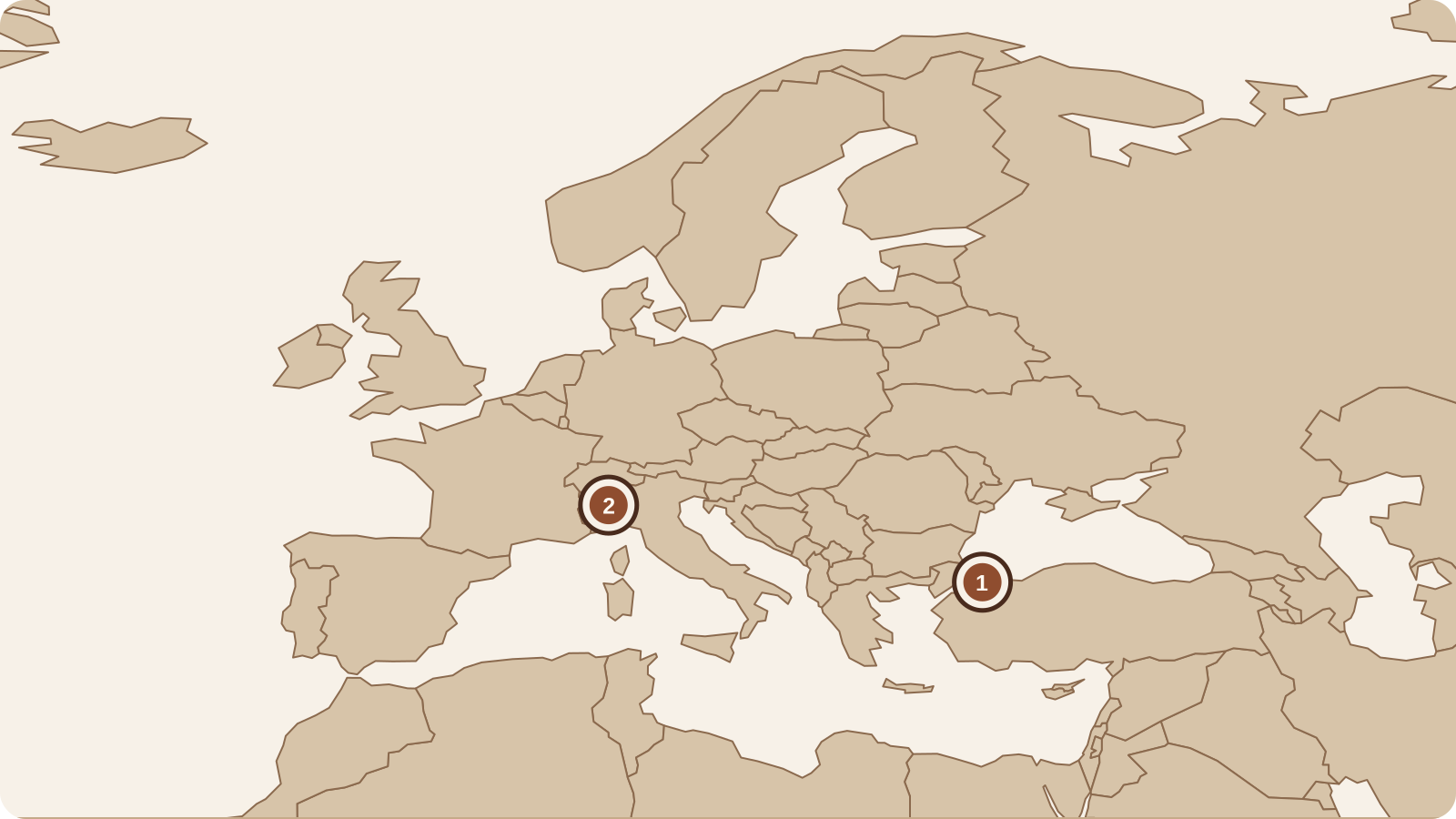
- Ottoman Istanbul
- 16th century
- Northern Italy
- Around 1900
Tools
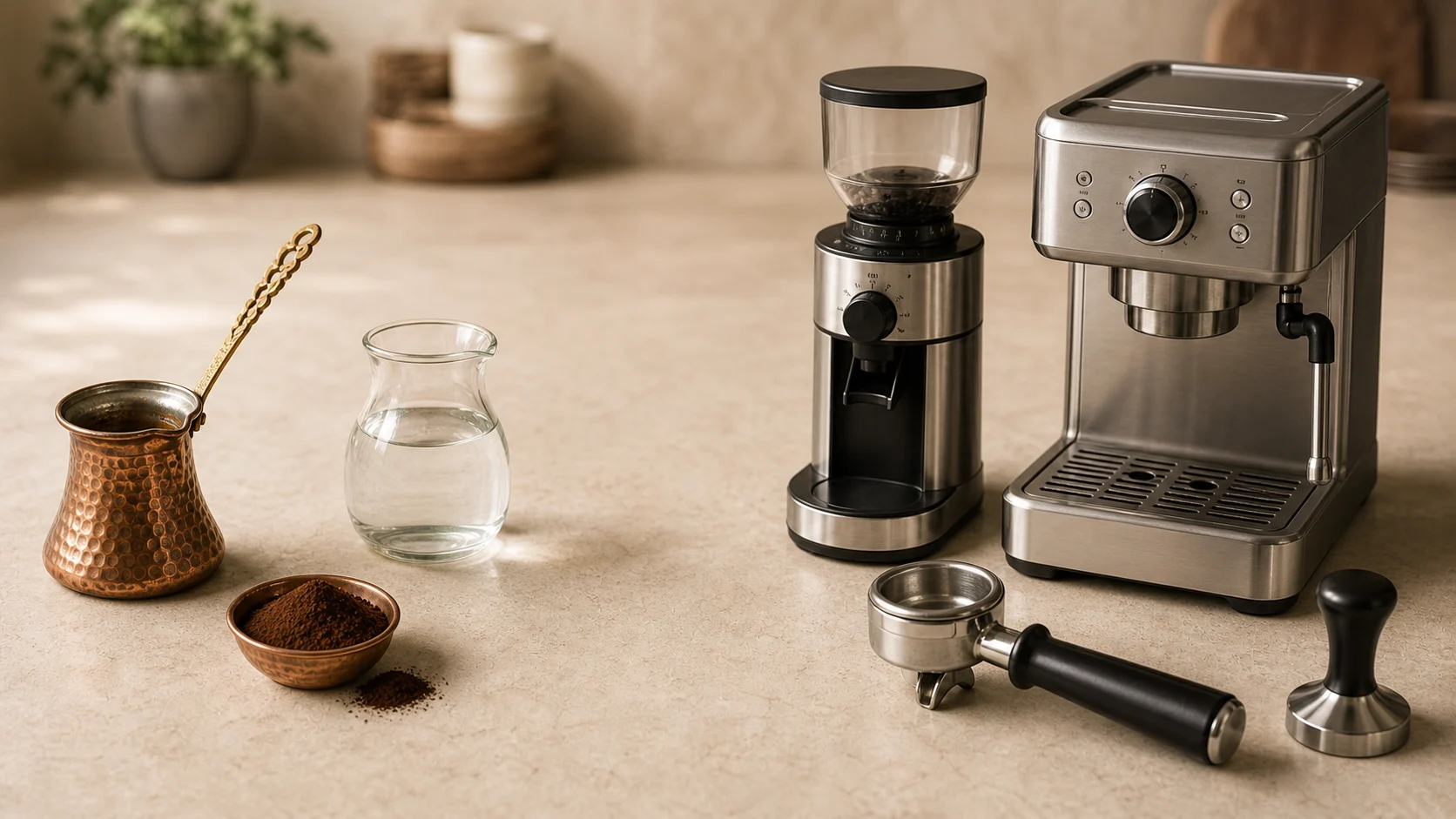
Turkish coffee needs a cezve (pot), water, powder-fine coffee, and heat. Espresso needs a grinder, an espresso machine, a portafilter, and a tamper.
Brewing
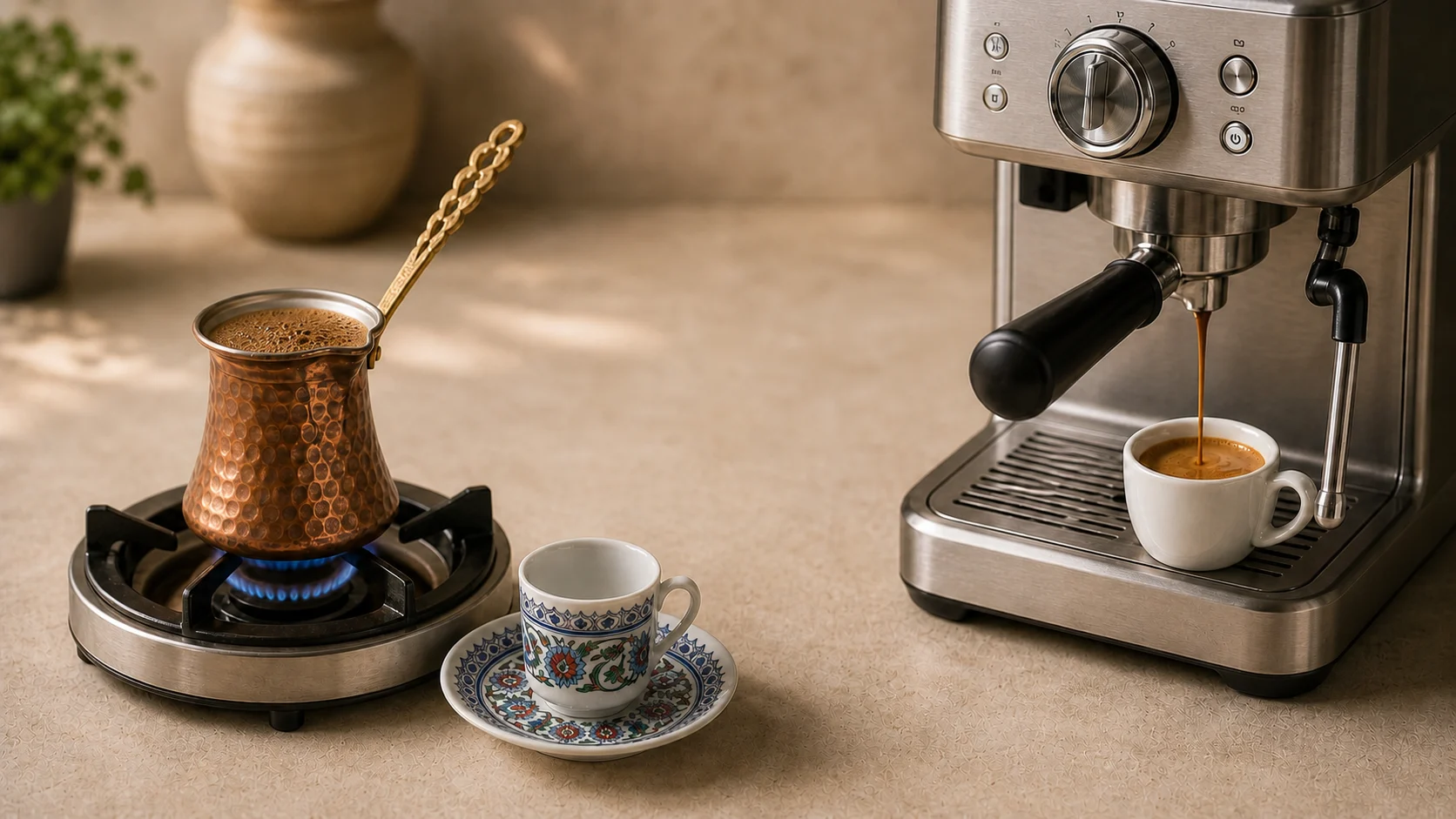
Turkish coffee uses a powder-fine grind. The coffee, water, and optional sugar are mixed in the cezve (pot) and heated slowly until the foam rises, then poured unfiltered so the grounds settle in the cup. Espresso uses a fine—but not powdery—grind, packed into a portafilter. The machine forces hot water through it under pressure, leaving the spent grounds behind and producing a short, concentrated shot.
Those settled grounds give the Turkish cup a second act. Flip it onto its saucer when you finish, and a few minutes later you can start reading coffee symbols in what the grounds left behind; an espresso puck stays in the machine. The cezve also takes spice straight into the pot with the cold water. A crushed pod is how cardamom coffee is made across much of the Middle East, and cinnamon coffee brewed this way steeps the spice instead of leaving it to clump in the cup.
Is Turkish Coffee Stronger Than Espresso?
It depends on what you mean by strong. Sip for sip, espresso carries more caffeine — about 210 mg per 100 ml, versus roughly 75 mg per 100 ml for Turkish coffee. Per serving, they land nearly even: a traditional 60–75 ml Turkish cup holds 50–65 mg, about the same as a 30 ml espresso shot.
But strength in the mouth is a different question, and here Turkish coffee usually wins. It is served unfiltered — the powder-fine grounds stay in the cup — so every sip carries dissolved solids and fine particles that espresso's puck holds back. That is why a Turkish cup tastes thicker, earthier, and more intense even when the caffeine is equal, and why first-time drinkers almost always describe it as the stronger of the two.
Full per-cup numbers against drip, cold brew, tea, and energy drinks are in our Turkish coffee caffeine guide.
Turkish Coffee vs Espresso: Common Questions
Most questions come down to strength, grind, and texture. Espresso is more concentrated, while Turkish coffee is unfiltered and often tastes fuller. Their grinds are not interchangeable: Turkish coffee is powder-fine; espresso is fine enough for pressurized water to pass through the puck.
Turkish coffee
- Grind
- Powder-fine
- Brew
- Heated with water
- Grounds
- Settle in the cup
- Body
- Fuller, textured
Espresso
- Grind
- Fine
- Brew
- Pressure through a puck
- Grounds
- Stay in the basket
- Body
- Concentrated, less sediment
What is the main difference between Turkish coffee and espresso?
Turkish coffee heats powder-fine coffee and water together and is served unfiltered. Espresso uses pressure to push hot water through a compact puck, leaving the grounds behind. That gives Turkish coffee more texture and espresso a shorter, cleaner concentration.
Does Turkish coffee have more caffeine than espresso?
A typical serving of Turkish coffee and a single espresso can contain a similar amount of caffeine, but the exact amount depends on the coffee dose, bean, serving size, and recipe. Turkish coffee often tastes stronger because it is unfiltered and full-bodied.
Can you use espresso grounds for Turkish coffee?
Espresso grounds are usually too coarse for Turkish coffee. Turkish coffee needs a powder-fine grind so the coffee can brew with the water, build foam, and settle properly in the cup.
Is there such a thing as Turkish espresso?
Not really — "Turkish espresso" usually means either Turkish coffee (brewed in a cezve, unfiltered) or espresso made with Turkish-style dark-roasted beans. The two methods are distinct: Turkish coffee never uses pressure, and espresso never leaves grounds in the cup. If a cafe menu says Turkish espresso, it is almost always traditional Turkish coffee.