Traditional
Traditional
Organic Specialty Grade Coffee
Notes: Chocolate, Hazelnut, Roasted Nuts
$26
LOW. SLOW.
Foam.
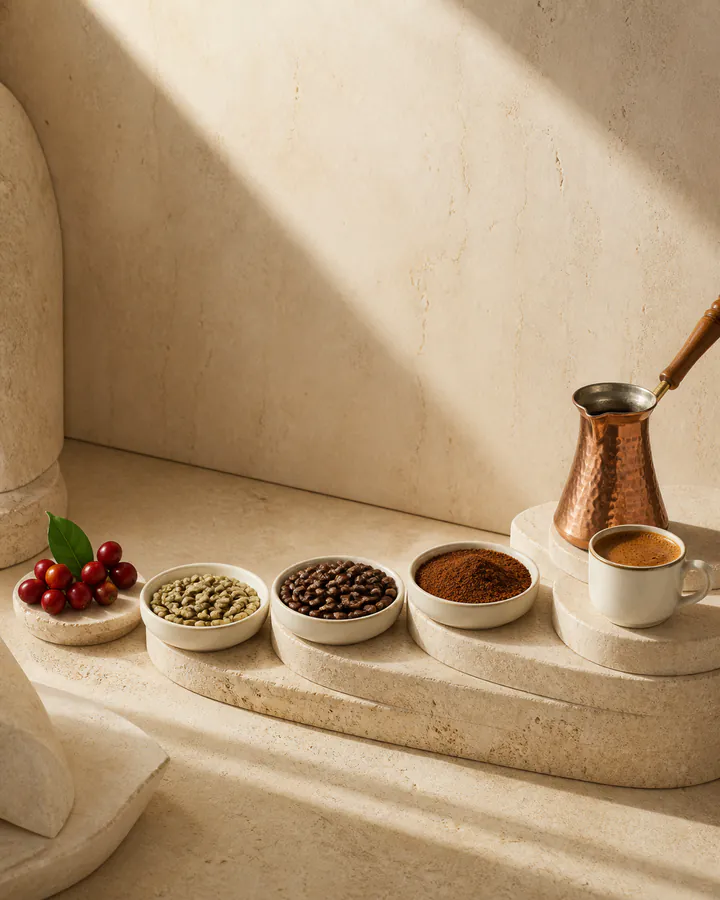
Three things and 3–5 minutes. No machine — just you, a small pot, and a little patience.
This is the 3–5 minute ritual.
You don’t need a machine, a filter, or a barista course. You need a small pot, cold water, and Organic Specialty Grade Coffee ground powder-fine for the cezve. Everything else is patience.
Keep this page open for your first cup: cold water, one stir, low heat, and lift the cezve before the boil.
One small cup
7 g coffee · 60–70 ml cold water.
Stir once. Use low heat — 3–5 minutes. Lift at 90–95°C, just before the boil. Pour gently, then let the grounds settle for a minute or two.

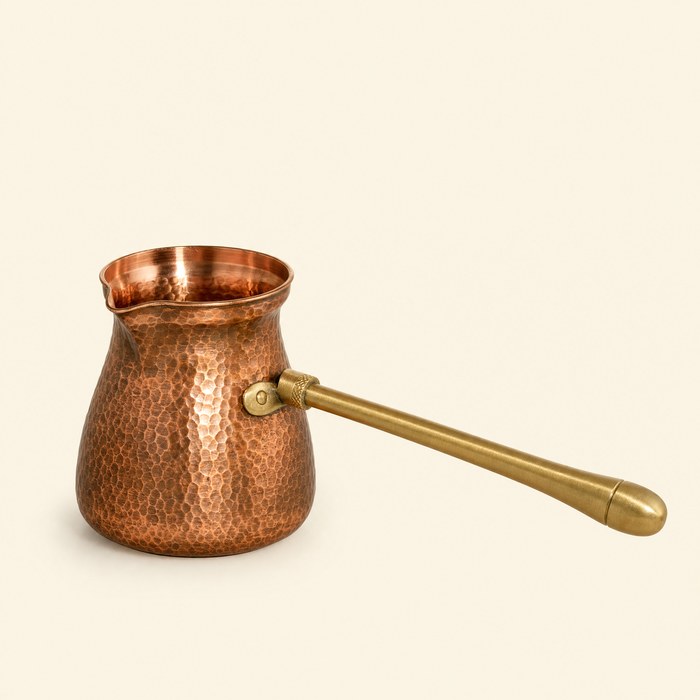
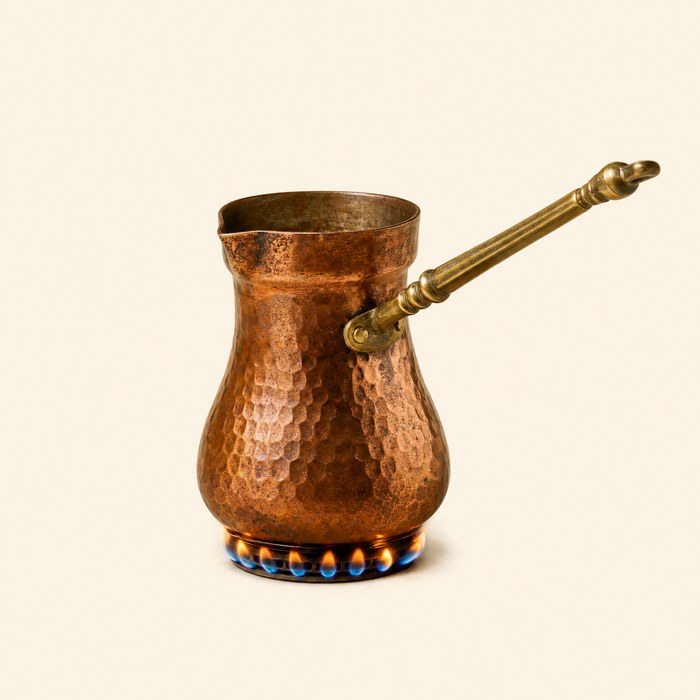
The cezve — or the smallest pot in your kitchen.
Three things

A small long-handled pot made for slow, controlled heat.

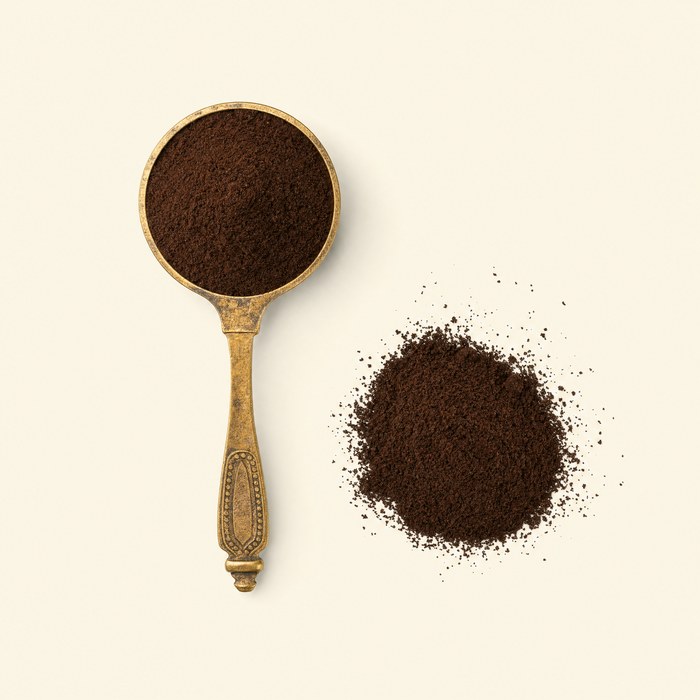
Ground finer than drip coffee so it can build body and foam.

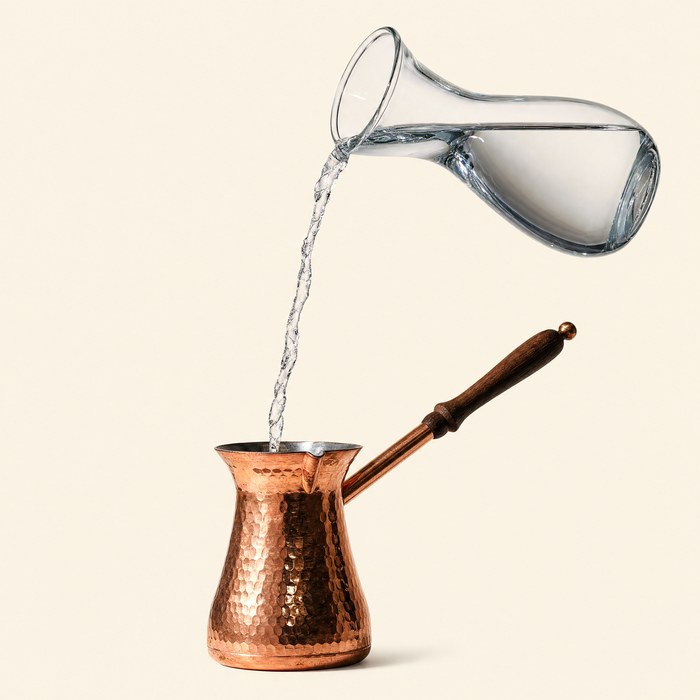
Add it after the coffee so the powder-fine grind hydrates before the heat rises.
The method

Add about 7 g of Lezzet to the cezve, then pour in 60-70 ml of cold water.
WhyAdding coffee first lets every powder-fine particle wet evenly before the heat starts.

Stir once to fully wet the coffee, then let it rest about 15 seconds.
WhyA cold, even start lets the grind wet evenly instead of clumping into dry pockets that taste harsh.

Set the lowest practical heat and let it climb gradually — it can take 3–5 minutes, so enjoy the process. Patience pays off.
WhySlow heat lets the coffee, water, and oils rise together and build foam — rushing it turns the cup bitter.

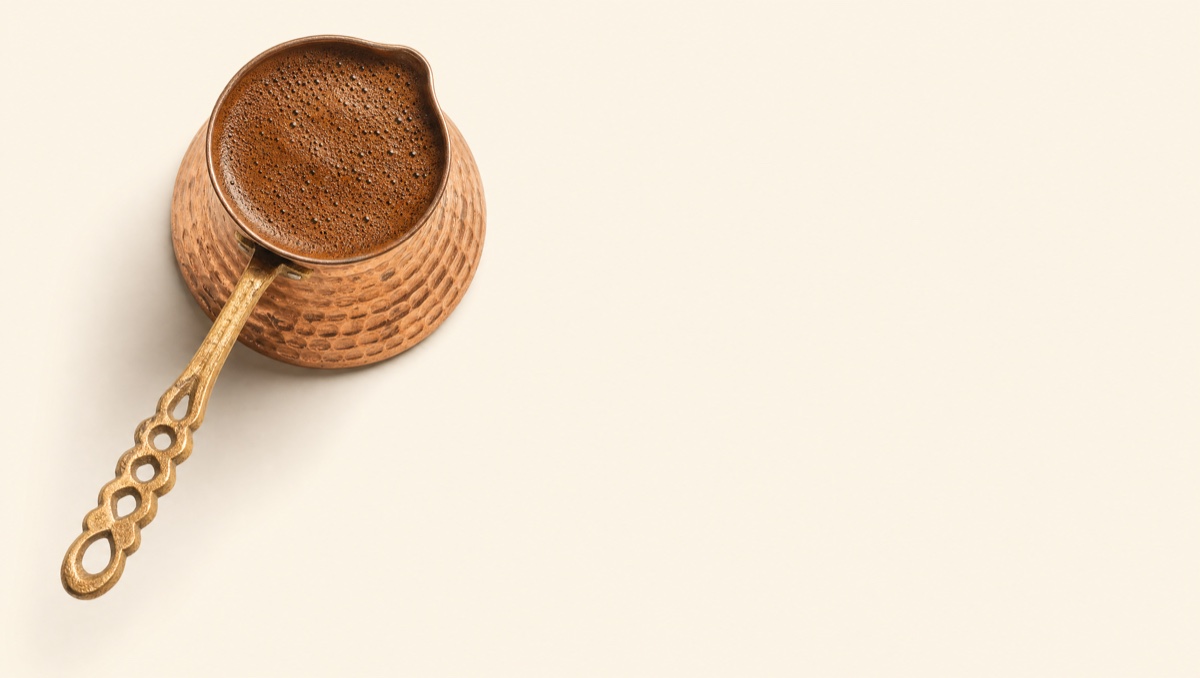
Stay close as the foam forms at the edges and moves toward the center.
WhyGood foam means the coffee warmed gently and carried its aroma upward before boiling.
Lift the cezve just before a rolling boil, around 90-95°C.
WhyA hard boil breaks the delicate foam and pushes the cup bitter.
Keep the spout close to the cup and pour gently down the side.
WhyPouring low lets the foam land intact.
Wait 1-2 minutes, then sip slowly from the top.
WhyThe unfiltered grind is part of the body — it settles so you sip the clearer top layer.
Stop before the thick grounds at the bottom of the cup.
WhyThey are meant to settle — or flip the cup if you enjoy the cup-reading tradition.
The foam is your North Star. It takes a few attempts — that’s part of it.
Shop Powder-Fine CoffeeThe why
Turkish coffee starts with coffee in the cezve, then cold water, because the grounds are not filtered out later. Adding the coffee first makes it easier to wet every particle before heat starts extraction. The powder-fine coffee needs time to hydrate before extraction accelerates. Cold water gives the particles a calm, even start, so they disperse instead of clumping and releasing harsh flavor all at once. Warm water shortens that window: the outside of the grounds extracts quickly while dry pockets can stay trapped inside. The result is often thinner foam, uneven body, and a cup that tastes sharper than it should.
Slow heat is control. A cezve has no paper filter, no machine pressure, and no separate brew chamber, so the heat curve is the brew method. Low heat lets the coffee, water, and natural oils rise together. If the heat is too fast, the bottom of the cezve gets ahead of the top, the foam rushes up, and the cup can swing bitter before the flavors have integrated. A gentle climb gives you time to stop before a rolling boil.
Foam is not just decoration. In Turkish coffee, it is the sign that the coffee has warmed gradually, carried oils and fine particles upward, and built a soft cap before boiling. Good foam gives the first sip a rounder texture and protects the aroma for a moment after pouring. A hard boil breaks that foam, scatters the aromatics, and leaves the surface flat.
The grounds stay in the cup because that is part of the texture and ritual. The powder-fine grind creates body in the liquid, then settles after pouring. Waiting a minute or two is not optional etiquette; it is part of the brew. You sip from the clearer top layer while the heavier grounds collect at the bottom. That is why the grind, the cold start, and the slow heat all matter so much.
If the first cup fights back
The heat likely moved too fast or the coffee boiled too hard. Use lower heat and remove the cezve before a rolling boil.
Avoid stirring once the cezve is heating. Give the foam time to rise gradually from the edges toward the center.
Use a little more coffee, stir once at the beginning, and make sure the powder-fine grind fully hydrates before heating.
Limited-time offer
Organic Specialty Grade Coffee

$63$70