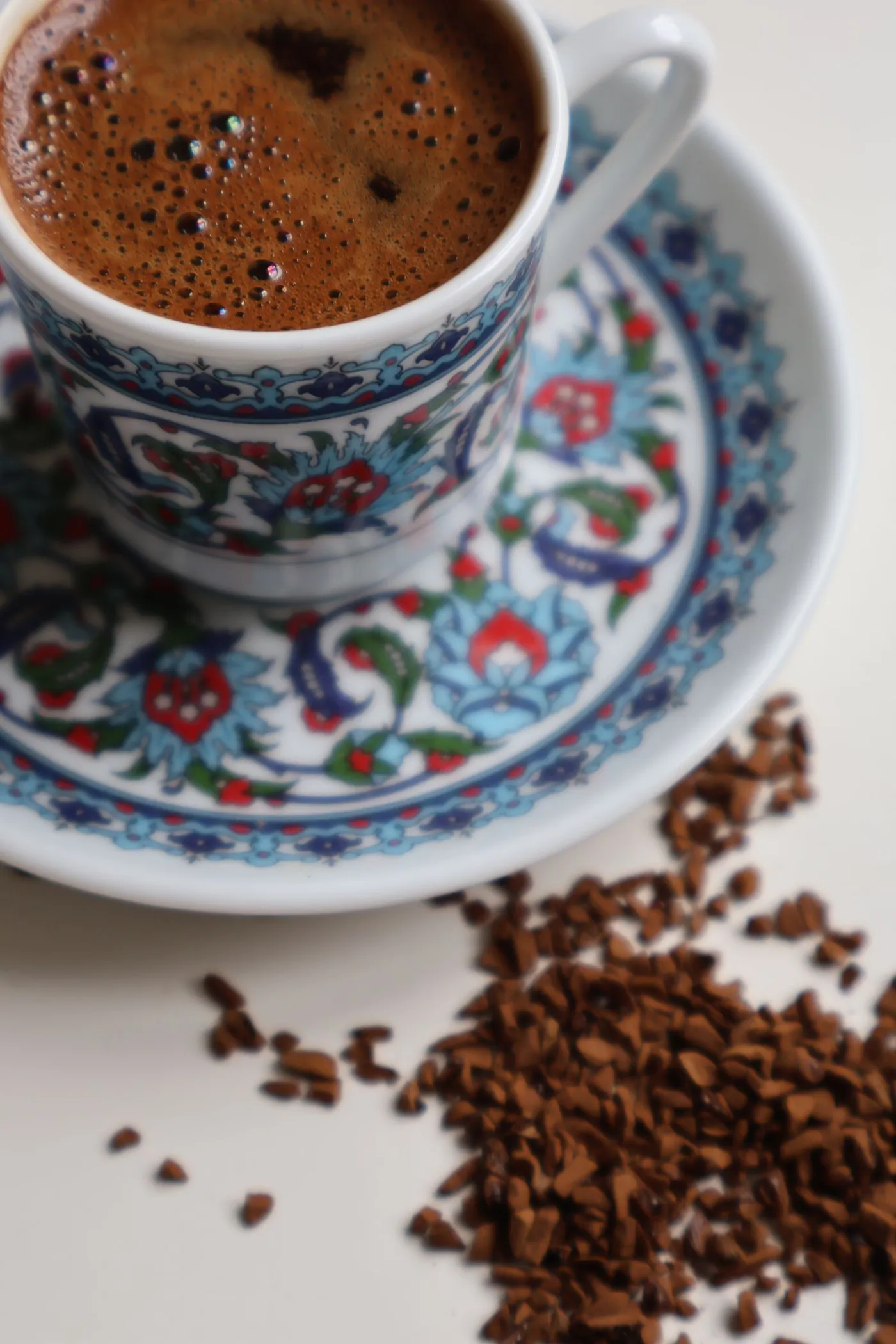
Freshness matters with any coffee, but it matters even more with Turkish coffee. The grind is powder-fine, which gives the cup its body and foam, but also creates more surface area for air to reach after the bag is opened.
It comes down to keeping oxygen, heat, light, and moisture away from the coffee between brews. Lezzet uses resealable bags with a one-way valve because that format protects freshness after opening better than a rigid tin does.
Why the Bag Matters After Opening
A tin can look nice on a shelf, but once it is opened, it keeps a pocket of air inside with the coffee. As the coffee level drops, that empty space grows, and more oxygen stays trapped around the grounds every time the lid goes back on.
A flexible bag works differently: it shrinks as you scoop, so less air sits against the coffee between cups.
How the Valve Helps
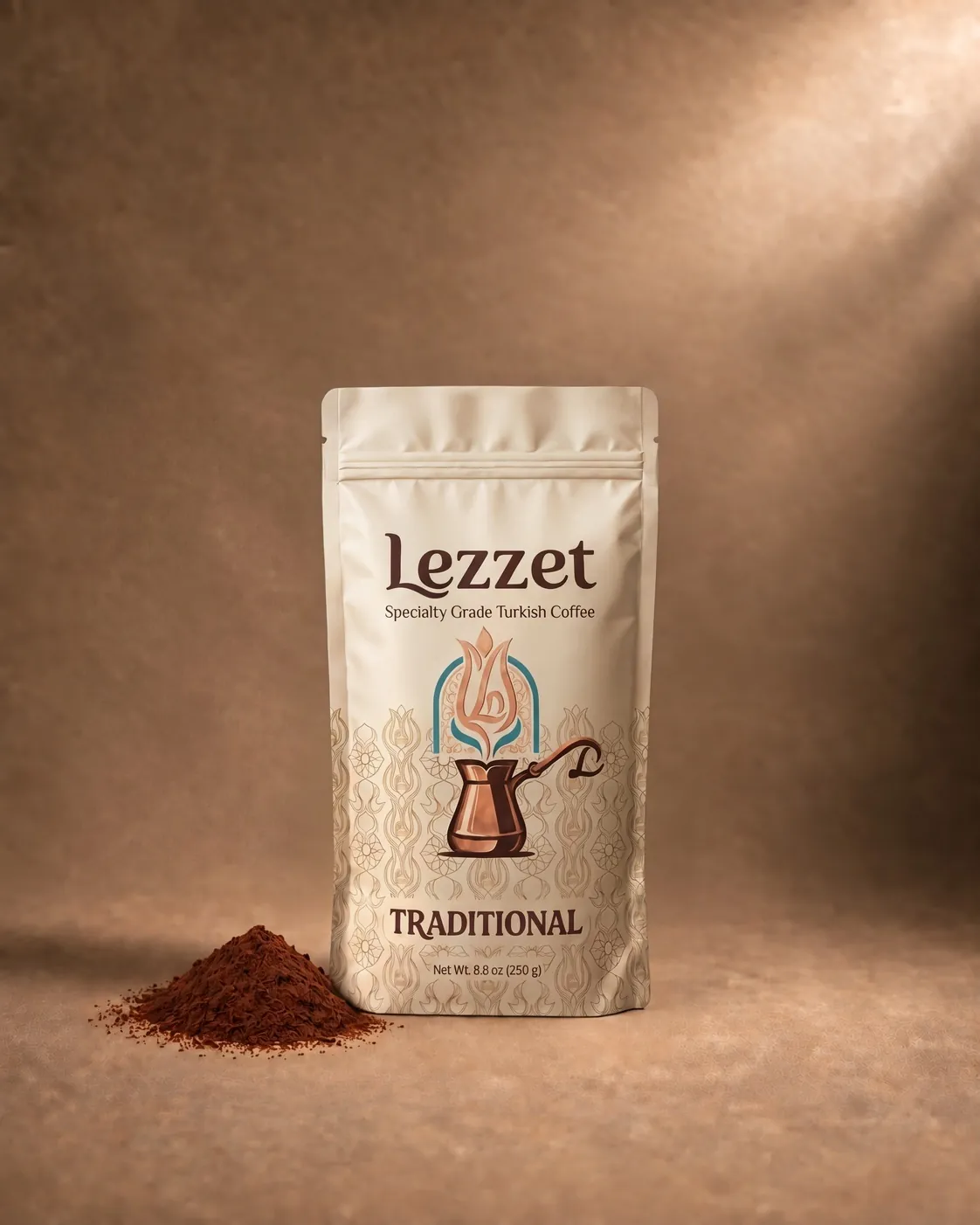
Fresh-roasted coffee releases CO2 after roasting. The one-way valve lets that gas escape from the bag without allowing outside air to flow back in. That helps the bag protect the coffee while it rests after roasting and before you open it.
After the bag has been opened, the valve still belongs to the freshness system, but it does not replace resealing. The best habit is to push out excess air, zip the bag closed, and store it in a cool, dry cabinet.
The Enemies of Fresh Turkish Coffee
Air: Oxygen causes oxidation, which dulls flavor and aroma once a bag is opened.
Light: UV light breaks down flavor compounds, and direct sunlight is one of the fastest ways to stale coffee.
Moisture: Coffee is hygroscopic — it absorbs water from the air, which introduces mold risk and dilutes flavor over time.
Heat: Warm temperatures speed up degradation, so a cool, stable spot is best for preserving freshness.
The Right Way to Store
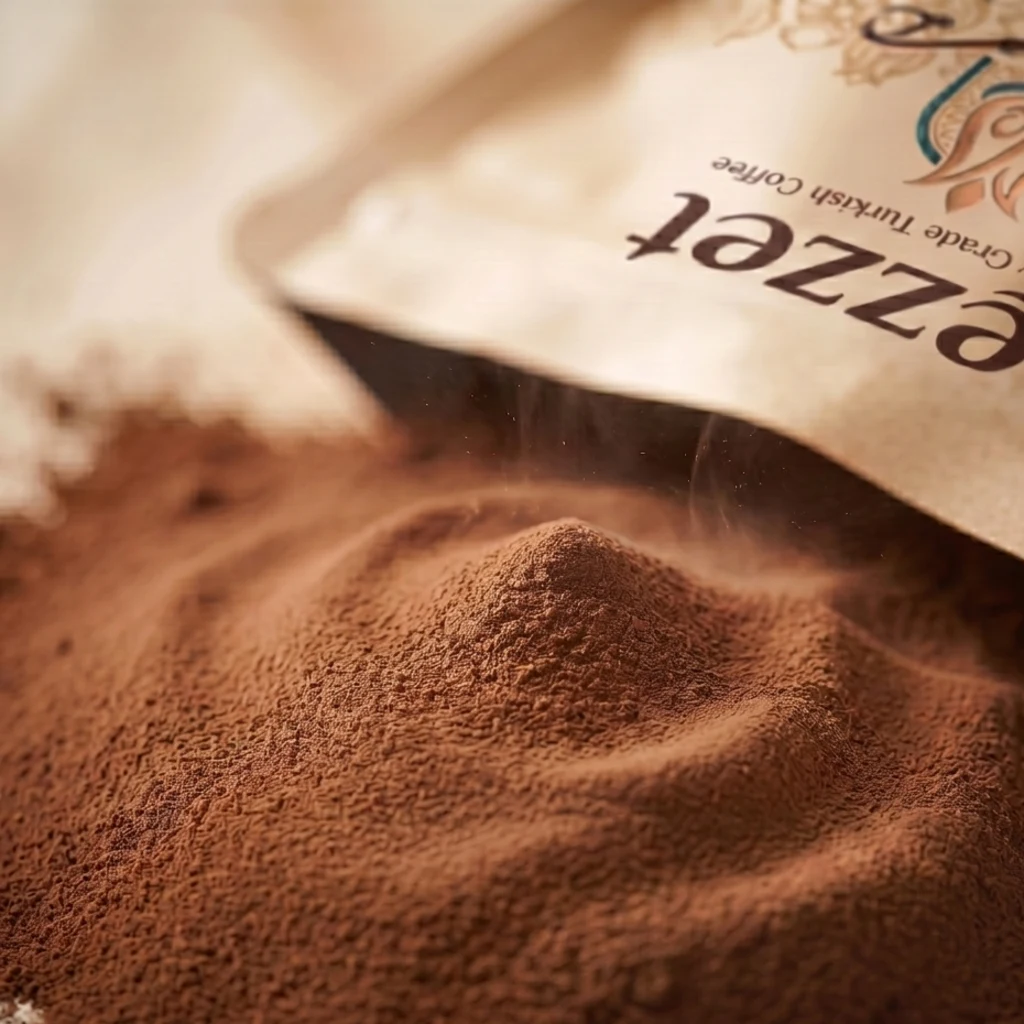
After every use, squeeze excess air out of the bag before resealing. Start at the bottom, gently press upward toward the zipper, then seal the zipper all the way across. Do not leave the bag partly open or loosely folded.
Store in a cool, dry place like a kitchen cabinet away from the stove. Room temperature (65-75°F) is ideal. Avoid countertops near windows where sunlight hits.
Coffee Tins vs Bags: Why a Bag Wins After Opening
To be fair to tins: they are sturdy, stack well, and an unopened tin protects coffee from light and crushing. Once it is opened, though, the empty space above the coffee is the problem.
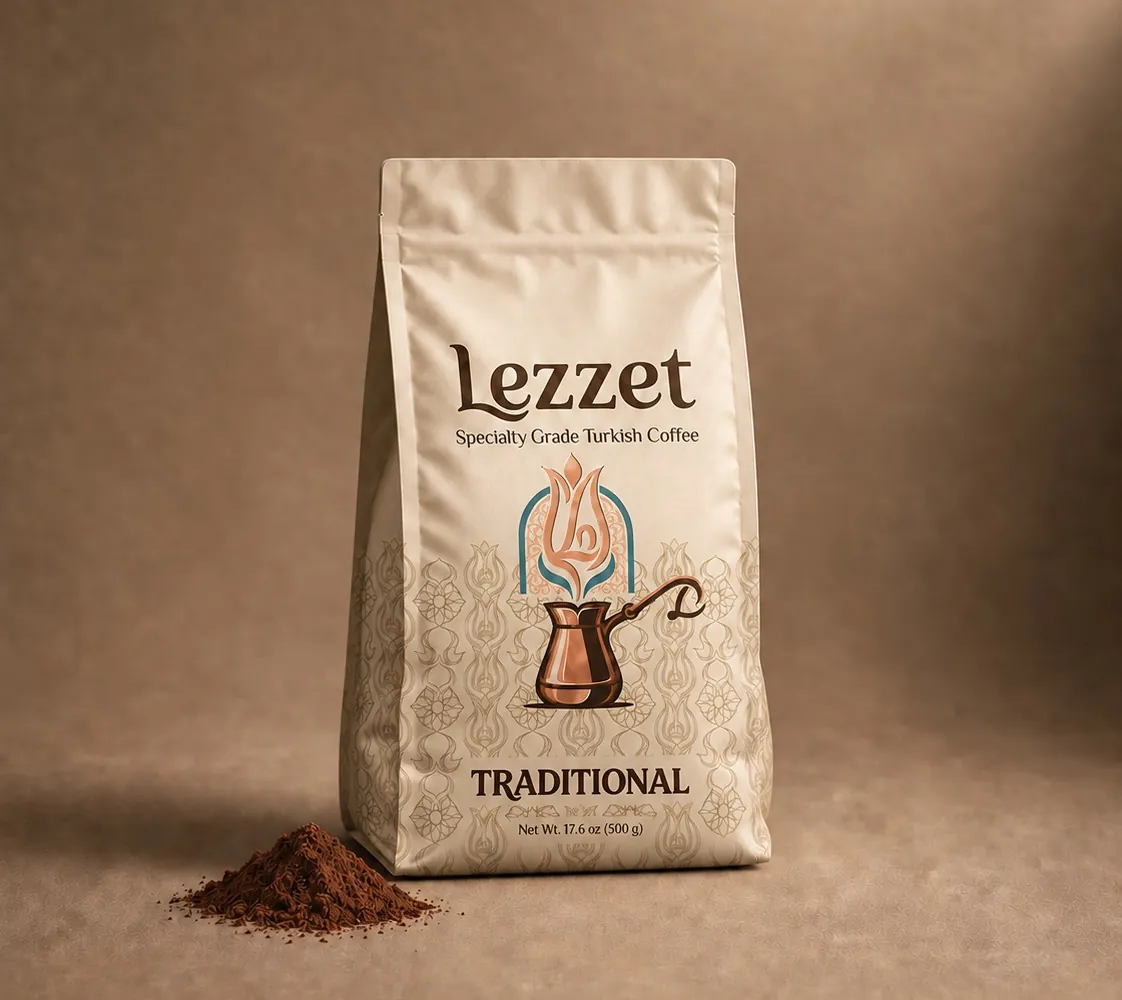
That is why we package Lezzet in bags instead of tins. This coffee is not built to sit on a shelf for months. It is roasted in small batches and sent to you fresh, so you can drink through it while the aroma, body, and foam are still at their best.
If you love the look of a tin, use both: keep the coffee sealed in its original bag and store the bag inside the tin. You get the display piece on the shelf, and the bag inside still does the work of protecting freshness.
How Long Does It Stay Fresh?
- After opening: Best within 1-2 weeks for peak aroma and foam
- Still usable: 4-6 weeks when air is pressed out and the bag is sealed well
- Unopened: The sealed bag keeps it fresh for up to a year, with the valve releasing roast gas while keeping oxygen out
- Storage: Cool, dry, dark cabinet; not the fridge, freezer, windowsill, or stove area
This is why we roast in small batches and ship directly from the roastery.