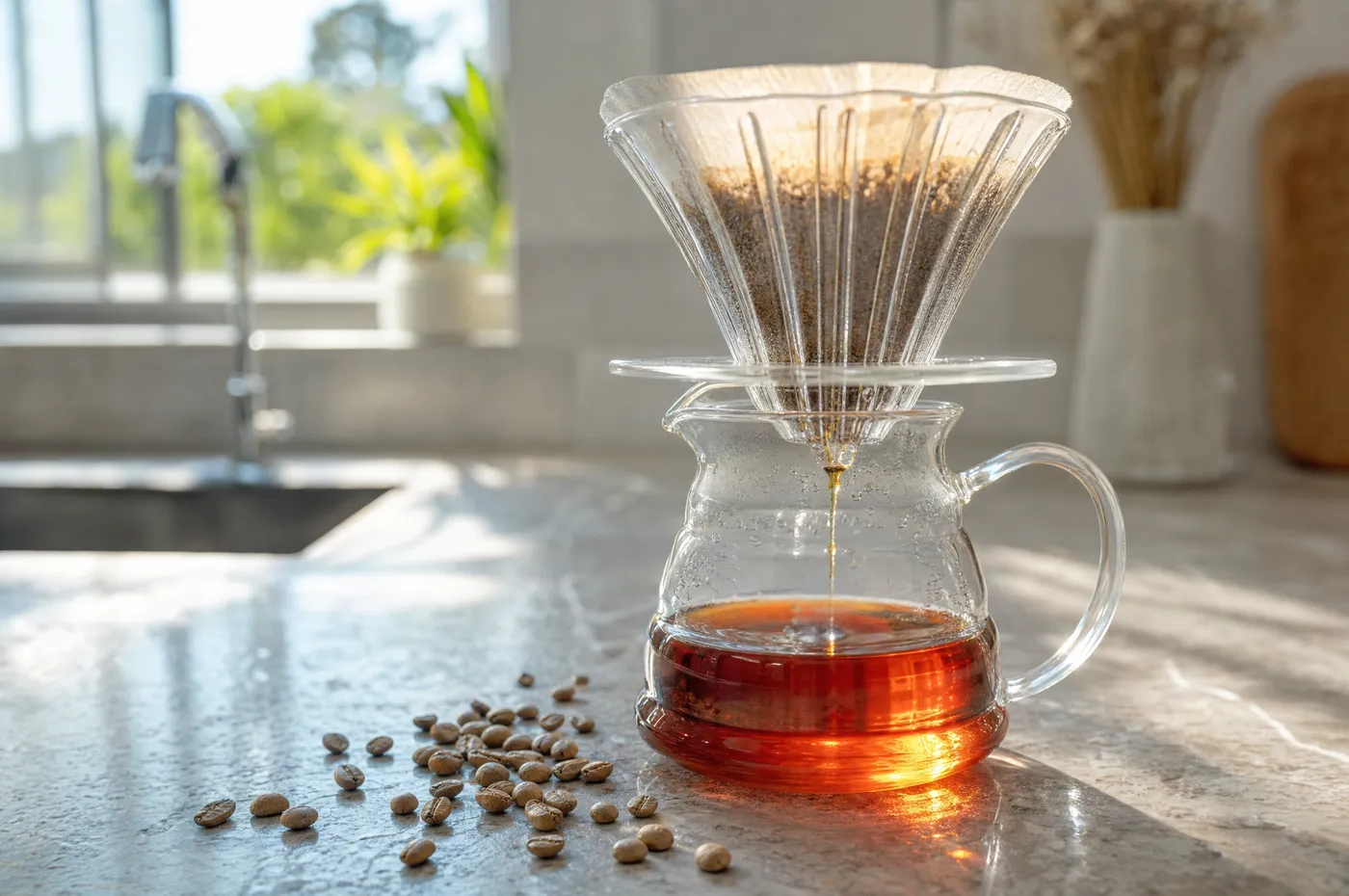
Acidity in coffee is the bright, lively taste that makes a good cup feel juicy instead of flat, and coffee tasters treat it as a compliment.
I know. "Acidic" sounds like something you'd want less of. But in coffee it is the lift: the hint of apple, lemon or berry that wakes the whole cup up. In Part 4 we climbed the mountain that builds it. Now let's taste it.
What Does Acidity Mean in Coffee?
When coffee people say acidity, they mean a taste, not a number. It is the lively, mouth-watering quality you notice at the front of the sip. Think of the difference between a crisp apple and a glass of still water.
Bright or Sour: What's the Difference?
Balance. Brightness is acidity with sweetness and body around it, like a ripe peach. Sourness is acidity standing alone, sharp and thin, like a peach picked a week early.
Sour usually comes from the brew or the roast, not the bean: coffee extracted too briefly, or roasted too little to develop its sugars. Get those right and the same acids taste bright.
Which Acids Are in Coffee?
Dozens, but three do most of the talking.
Chlorogenic acids are the big family in the unroasted bean. In the roaster they break down, partly into quinic acid, which keeps rising the darker the roast goes.
Citric acid is the lemon-and-orange one. It brings the citrus snap you find in many high-grown coffees.
Malic acid tastes like crisp apple or pear, a softer, rounder kind of bright.
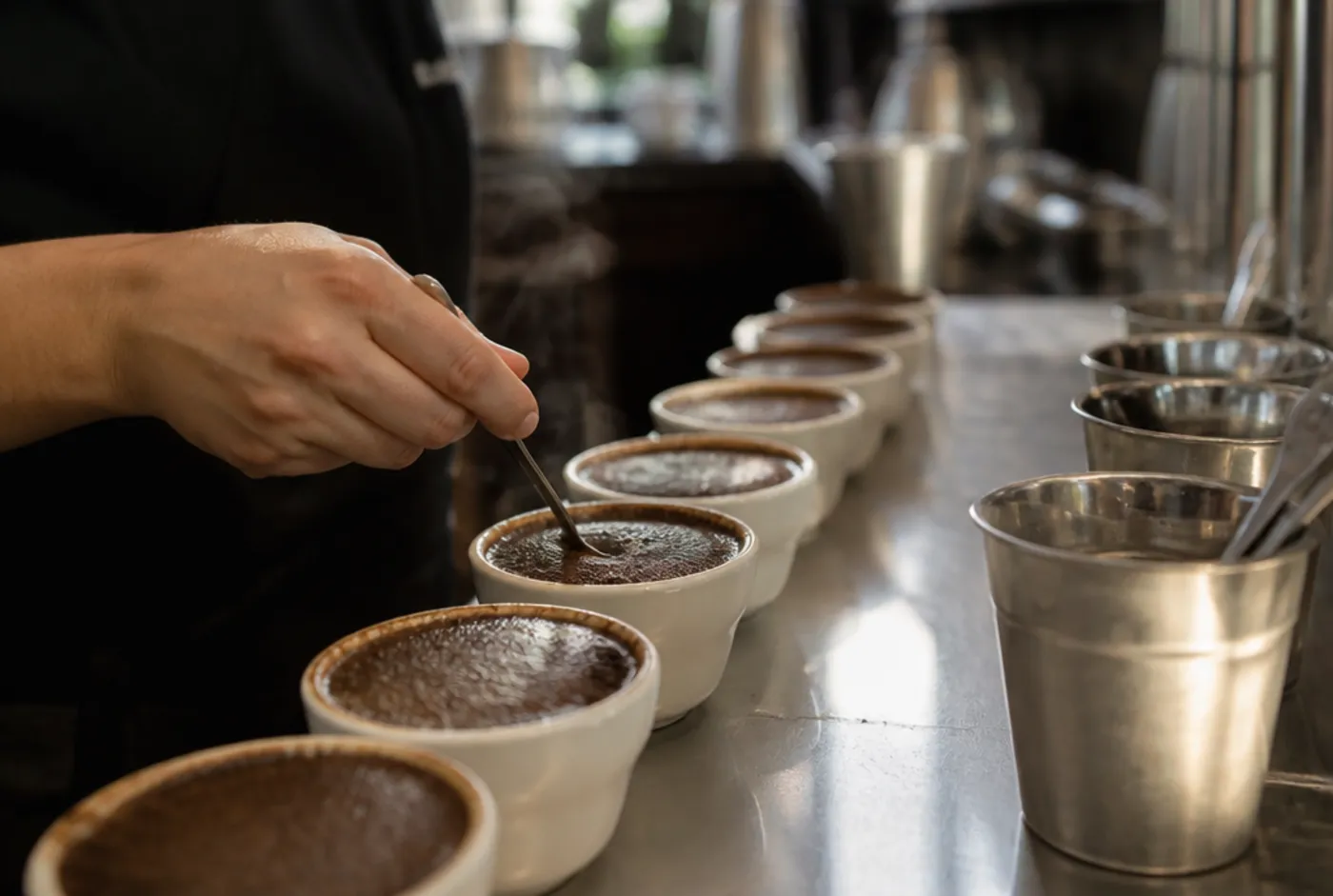
What Turns Acidity Up or Down?
Four things, roughly in the order the coffee meets them.
Origin and species. Some places and plants simply lean bright, others lean round. Arabica generally tastes brighter than robusta.
Altitude. As we saw in Part 4, cool nights slow the cherry, and a slow cherry builds more acid. High-grown usually means brighter.
Processing. Washed coffees, with the fruit removed before drying, tend to taste clean and bright. Coffees dried inside the fruit tend to taste heavier and fruitier, with the acidity tucked in.
Roast. The biggest dial of all. Citric, malic and chlorogenic acids all fall as the roast gets darker. Light roasts keep it; dark roasts trade it for depth, chocolate and body.
What Is Low-Acid Coffee?
Coffee that sits at the round, smooth end of the dial. It is usually grown lower and warmer, processed in a way that adds body, and roasted darker. The cup tastes velvety and heavy, with notes like dark chocolate and nut.
Can One Cup Have Both?
Yes, and that is the whole idea behind our blend. Lezzet Traditional pairs a low-acid, rich coffee roasted dark with a bright one roasted lighter. The rich one is the base: velvety, dark chocolate and nut. The bright one sits on top and keeps the cup lively. Each is roasted on its own, fresh in the USA in small batches, then blended and ground powder-fine.
Next up, Part 6: body and flavor notes, or how a seed ends up tasting of blueberry.
Coffee Acidity: FAQ
What does acidity mean in coffee?
In tasting, acidity is the bright, lively, mouth-watering quality of a cup, the part that reminds you of fruit. Coffee professionals score it as a quality, not a flaw.
What is the difference between bright and sour coffee?
Brightness is acidity in balance with sweetness, so it tastes lively and clean. Sourness is acidity on its own, sharp and thin, often from coffee that was under-extracted or roasted too little.
Which acids are in coffee?
Mainly chlorogenic acids, plus citric, malic, quinic and acetic acid, among others. Citric and malic acid give the fruity notes; roasting breaks chlorogenic acids down into other compounds, including quinic acid.
Does dark roast have less acid?
Yes, in taste and in chemistry. Citric, malic and chlorogenic acids all fall as the roast gets darker, so dark roasts taste rounder and lighter roasts taste brighter.
What makes a coffee low in acid?
Usually a combination: grown lower and warmer, processed in a way that adds body, and roasted darker. The result tastes smooth, round and heavy rather than bright.