Light vs dark roast comes down to how far the beans are roasted: a light roast stops soon after the beans first crack and keeps more of the coffee's own acidity and aroma, while a dark roast goes further, trading brightness for deeper, roastier flavors, lower acidity and a heavier feel. Despite the bold taste, a dark roast does not carry more caffeine.
By now in the series, the coffee has grown, ripened and dried. Now it meets fire. This is the part of the series where we stop talking about farms and start talking about our own work.
What Does Roasting Do to Coffee?
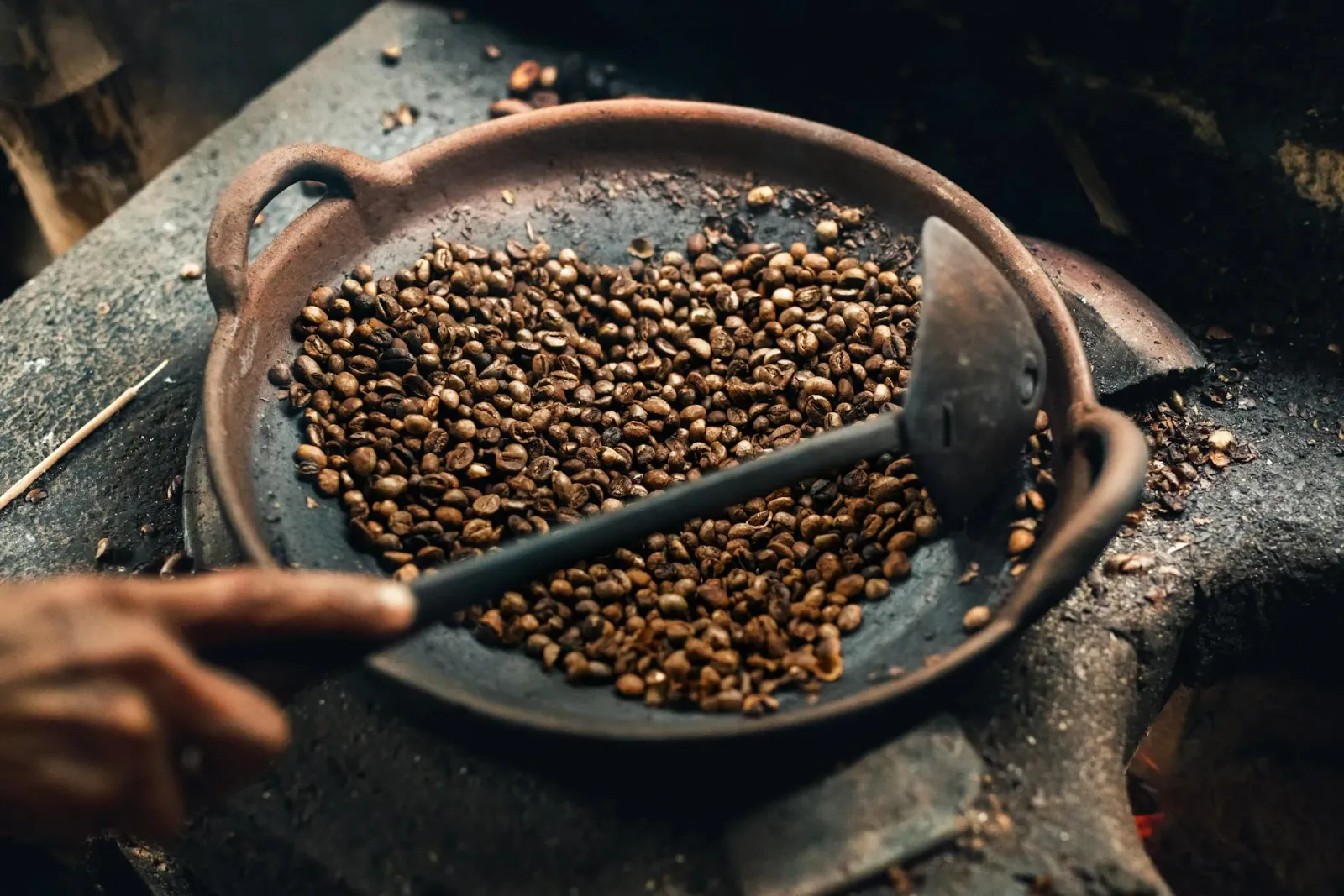
An unroasted coffee bean is pale, hard and almost impossible to brew well. Roasting turns it into coffee. As the beans heat, they dry out, turn yellow, then brown, and swell. Two families of reactions do most of the work. The Maillard reaction, the same browning that happens to bread crust and seared meat, links sugars with amino acids to create hundreds of aroma compounds. Caramelization breaks the sugars down further, adding sweetness and color.
The bean loses weight along the way, mostly water, and gets lighter and more porous.
What Are First Crack and Second Crack?
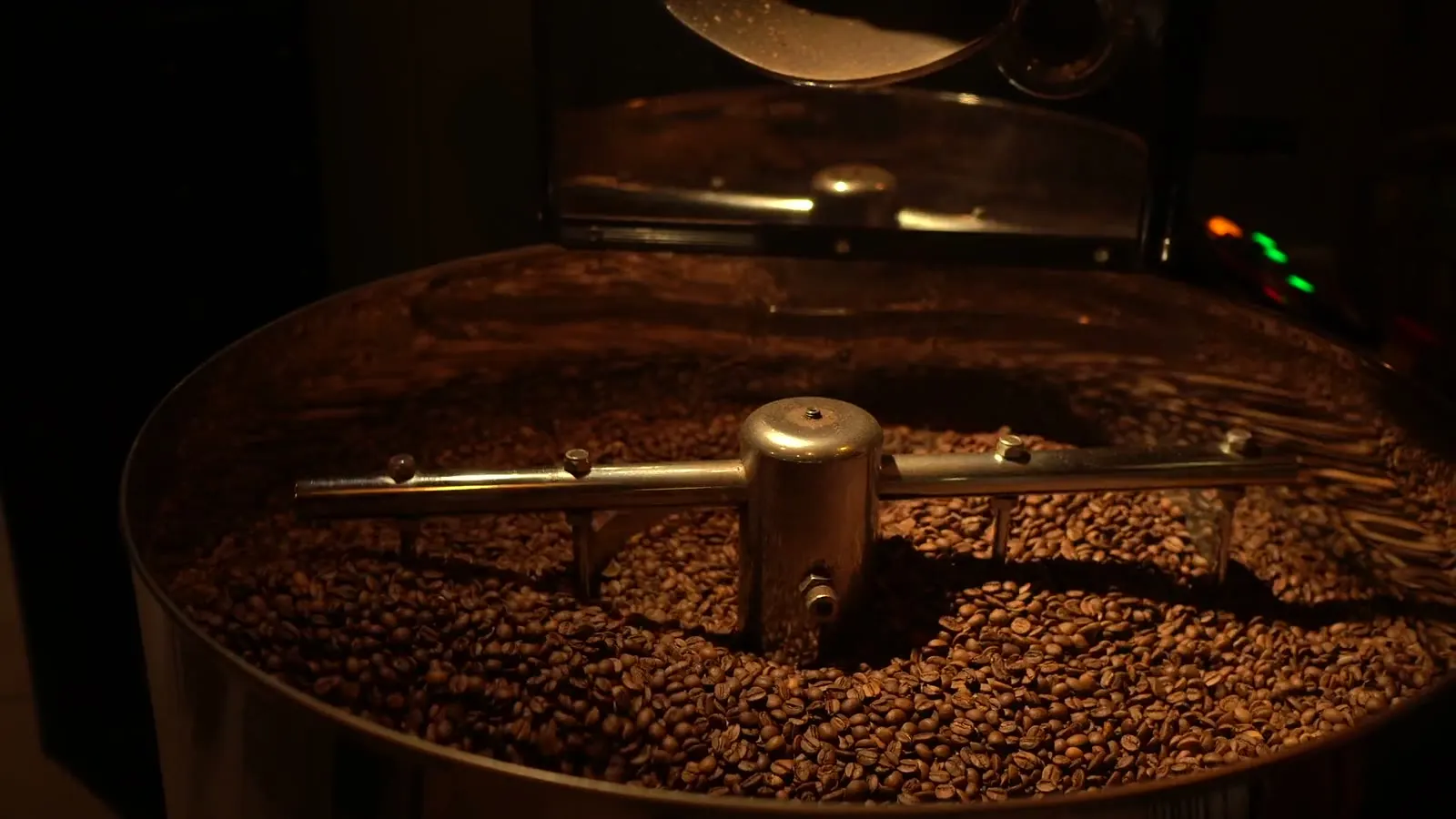
Roasters listen to coffee as much as they watch it. At around 196 °C (385 °F), the beans make an audible pop, called first crack, as steam and carbon dioxide force their way out. Light roasts are finished shortly after first crack. Medium roasts go a little longer. Keep going and a second, quieter crackle arrives at higher temperatures as the bean's structure gives way further; dark roasts are taken to or past it, around 224 °C (435 °F).
How Do Light and Dark Roasts Taste?
Light roast tastes most like where the coffee came from. Because the Maillard reaction has gone less far, more of the bean's own character survives: floral, fruit and citrus notes, a lively acidity and a lighter body. A high-grown coffee roasted lighter can smell of flowers before you sip. The pale gold Saudi gahwa of the Gulf is brewed from beans roasted lighter still, and pours closer to the color of tea.
Dark roast tastes more of the roast itself: dark chocolate, cocoa, caramelized sugar and toasted notes, with low acidity and a rounder, heavier feel. A rich, low-acidity coffee often takes to a dark roast well, because the roast deepens what is already there.
Neither is better. They are different answers to the same bean, and the right one depends on the coffee and the cup.
Does Dark Roast Have More Caffeine?
No, and the popular myth that light roast has a lot more is overstated too. Caffeine is a stable compound and holds up well at normal roasting temperatures. Measured by weight, the two are close.
Where a small difference creeps in is the scoop. Dark-roast beans have lost more mass and puffed up more, so they are less dense. A scoop of light roast holds slightly more coffee, and so slightly more caffeine, than the same scoop of dark roast. If you weigh your coffee, as Turkish coffee recipes do, the difference all but disappears. For the numbers in a small cup, see how much caffeine is in Turkish coffee.
Which Roast Has Less Acidity?
Dark roast. Coffee's acids, including the chlorogenic acids that help give a light roast its brightness, break down as roasting goes on. That is why dark roasts taste smoother and less tangy, and light roasts taste brighter and livelier. Acidity is not a flaw; in coffee it is what tasters call brightness.
Which Roast Has More Body?
Body is how heavy the coffee feels in your mouth. Medium and dark roasts usually feel fuller and rounder than light roasts, which can feel lighter and more tea-like. The coffee itself matters as much as the roast; Part 3 shows how where it grew shapes body before it ever reaches a roaster.
Why Would a Blend Roast Two Coffees Differently?
Because no single roast suits every coffee. A bright, high-grown coffee keeps its aroma when roasted lighter and loses it when pushed dark. A rich, low-acidity coffee often tastes its best taken darker, where it gives up dark chocolate notes and body. Roast both together to one level and one of them has to compromise.
The answer many roasters use is to roast each coffee on its own, to the level that suits it, and blend them afterward. The finished blend gets the depth and body of the dark roast and the aroma and lift of the light one. Our coffee origins guide shows how growing regions pair up as a base and an accent.
How Does Lezzet Roast Its Blend?
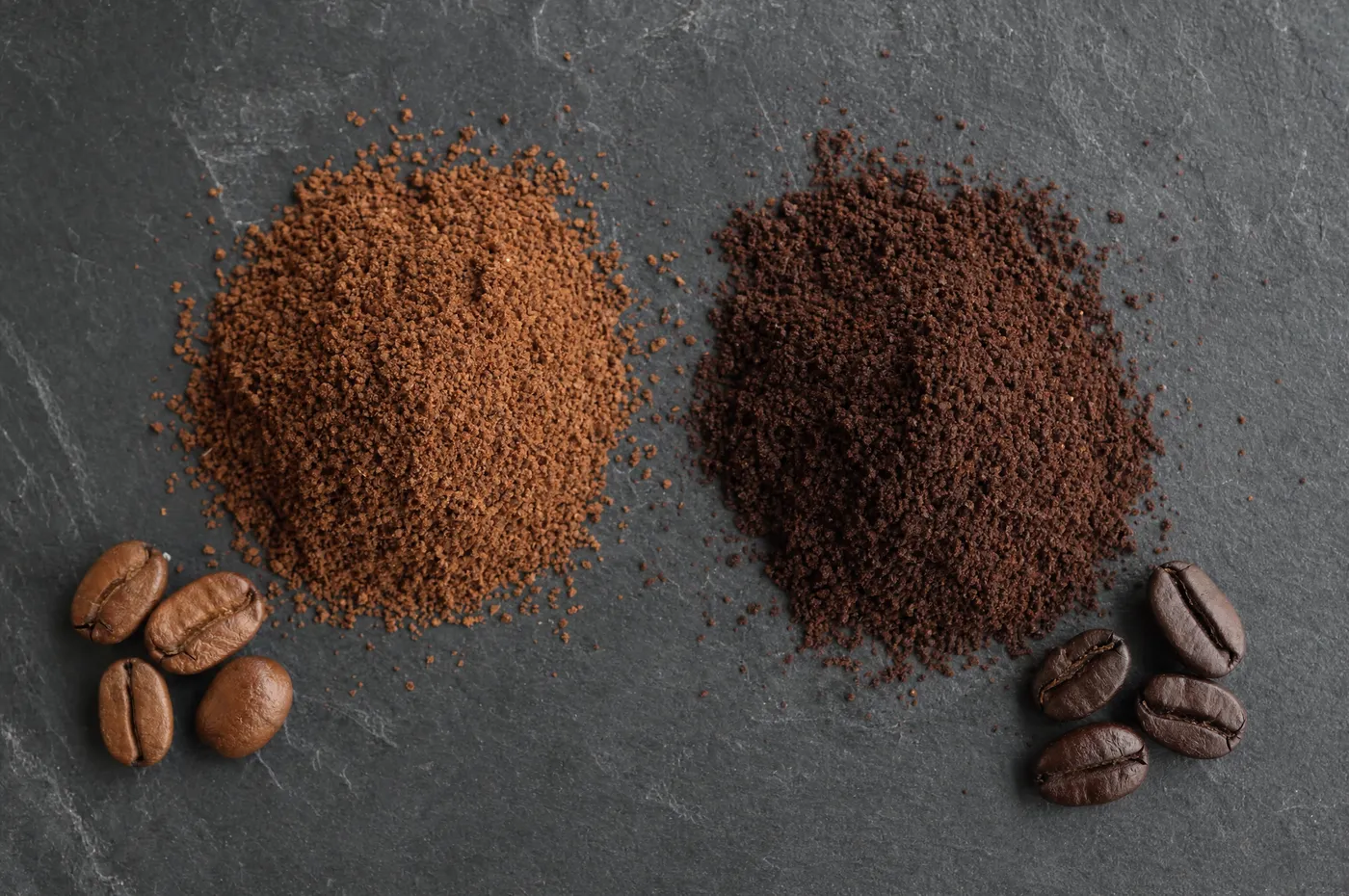
That is the whole idea behind our blend: two origins, two roasts. A rich one roasted dark, and a bright one roasted lighter. Each specialty-grade arabica is roasted on its own, then blended, fresh-roasted in the USA in small batches. The dark roast adds depth; the lighter roast keeps its brightness.
Choose Whole Bean Traditional Coffee to grind for espresso, moka pot, drip or French press. For Turkish coffee, use a grinder capable of a true powder-fine setting, or choose Traditional Turkish Coffee, the same blend already ground powder-fine.
Light vs Dark Roast FAQ
What is the difference between light and dark roast?
How long and how far the beans are roasted. Light roasts stop soon after the first crack, keeping more of the coffee's own acidity and aroma. Dark roasts go further, toward or past the second crack, trading that brightness for roasty, chocolate flavors, lower acidity and a heavier feel.
Does dark roast have more caffeine than light roast?
No. Caffeine holds up well at roasting temperatures, so by weight the two are close. Because light-roast beans are denser, a scoop of light roast can hold slightly more coffee, and so slightly more caffeine, than the same scoop of dark roast.
Is dark roast stronger than light roast?
It tastes stronger, because roast flavors are bold and the acidity is lower. But strength in the cup depends on how much coffee you use, not the roast level.
Which roast has less acidity?
Dark roast. Acids in the bean break down as roasting goes on, so darker roasts taste less acidic and lighter roasts taste brighter.
What is first crack in coffee roasting?
An audible pop as steam and gases break through the bean, at around 196 °C (385 °F). Light roasts are finished shortly after it. A second crack comes later, at higher temperatures, and marks the start of the dark roasts.
Why would a blend roast two coffees differently?
Because different coffees shine at different roasts. A bright, high-grown coffee keeps its aroma when roasted lighter; a rich, low-acidity coffee gains depth when roasted darker. Roasting each on its own, then blending, lets each one reach its best.