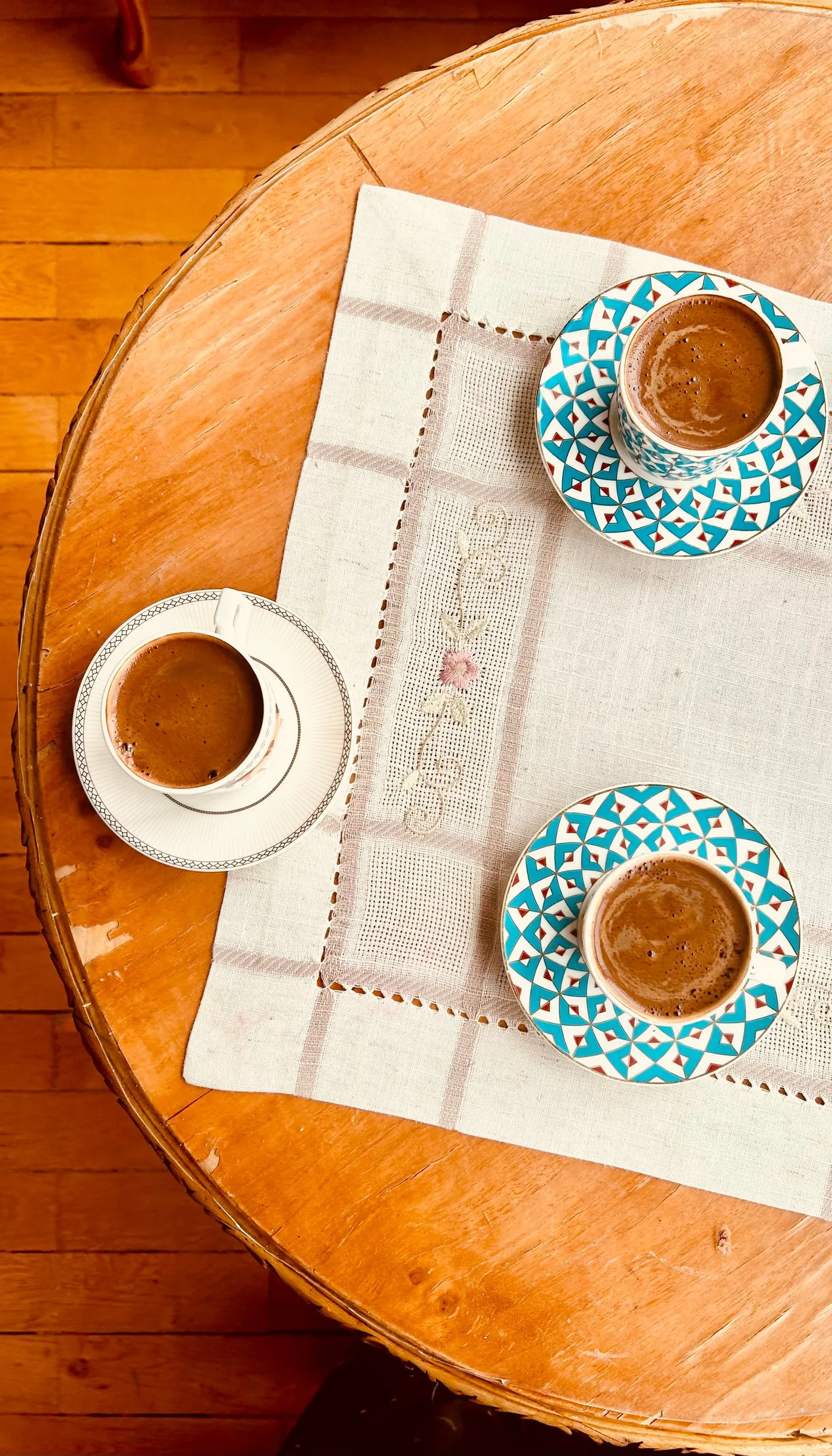
Two Arabic Coffees: Gulf Qahwa and the Lebanese Cup
The name covers two drinks that share a spice and a word. Qahwa is simply Arabic for coffee. Order it in Riyadh and it arrives pale, fragrant and grounds-free, poured a few sips at a time. Order it in Beirut and you get a small, dark, foamy cup that is brewed exactly like Turkish coffee. Here is how the two line up, with Turkish coffee alongside for reference.
| Detail | Gulf qahwa | Lebanese (Levantine) | Turkish |
|---|---|---|---|
| Also called | Gahwa, Saudi coffee, Khaleeji coffee | Ahweh, Lebanese coffee | Türk kahvesi |
| Roast | Light: golden to amber | Dark, or light and dark blended | Medium to dark |
| Grind | Medium-fine, settled out before pouring | Powder-fine, served unfiltered | Powder-fine, served unfiltered |
| Spice | Lots of cardamom; saffron, clove, rose water | Cardamom, a light hand, or none | Usually none |
| Sugar | None in the pot | Sada, wasat or hilweh, in the pot | Sade, orta or şekerli, in the pot |
| Brew | Simmered 15 minutes or more, by the pot | A few minutes on low heat, by the cup | A few minutes on low heat, by the cup |
| Pot | Dallah | Rakweh | Cezve |
| Cup | Finjan, handleless, a quarter full | Small cup, foam on top | Fincan, foam on top |
| Served with | Dates | A glass of water | Water, often Turkish delight |
| Caffeine | About 15–40 mg a cup | About 50–65 mg a cup | About 50–65 mg a cup |
What Is Qahwa? Gulf and Saudi Arabic Coffee
Across Saudi Arabia, the Emirates, Qatar, Kuwait, Bahrain and Oman, qahwa (said gahwa in much of the Gulf) means one specific drink: lightly roasted coffee, ground medium-fine, simmered with cardamom and poured without its grounds. Saudi coffee, Emirati coffee and Khaleeji coffee are all this drink, with each family keeping its own balance of roast and spice.
The roast sets the color. In the Hejaz and central Saudi Arabia the beans leave the pan barely golden, and the cup pours the color of strong tea. Further north the roast runs darker and the coffee turns amber. Traditionally the beans were roasted over coals in a long-handled iron pan, the mihmas, and pounded in a brass mortar, the mihbaj, whose ringing once told the neighborhood that coffee was on.
The spice is the point. Cardamom goes in by the spoonful, often with saffron for color and a honeyed note, and in some homes clove, ginger or a few drops of rose water. Few coffees anywhere carry as much cardamom as Gulf qahwa: roughly one part spice to two or three parts coffee.
Lezzet does not make Gulf qahwa. It needs lightly roasted coffee made for the dallah, and our coffee is built for the other Arabic cup.
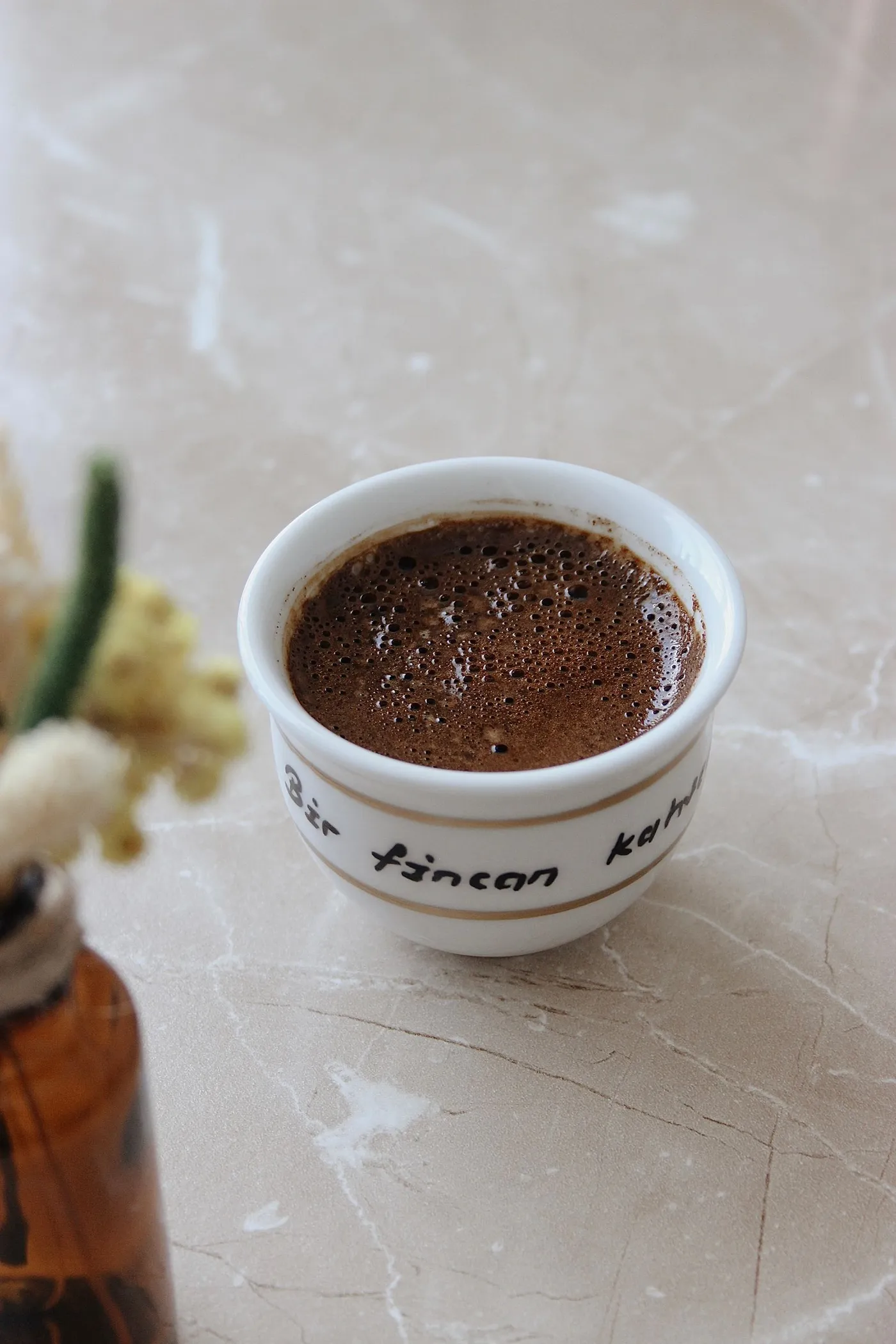
Gahwa Recipe: Arabic Coffee the Gulf Way
This is the method in Saudi, Emirati, Qatari and Omani homes: the coffee simmers for a quarter of an hour, the cardamom goes in near the end so it stays bright, and the saffron turns the pot gold. Use lightly roasted coffee sold as Arabic or Saudi coffee. Every family keeps its own spice balance, so treat these amounts as a starting point.
Ingredients
- 3 cups (720 ml) water
- 3 tablespoons lightly roasted Arabic coffee, medium-fine ground
- 1 to 1½ tablespoons cardamom pods, freshly ground
- A small pinch of saffron threads, soaked in a spoonful of warm water
- 2 or 3 whole cloves (optional)
- ½ teaspoon rose water (optional)
- Dates, to serve
Method
- Heat the water in a dallah or small saucepan until it bubbles.
- Stir in the coffee, let it rise once, then lower the heat and simmer uncovered for 10 to 15 minutes, until the foam sinks back.
- Take the pot off the heat for a minute so the grounds start to fall, then add the cardamom, saffron and cloves.
- Return it to low heat for 3 to 5 minutes at a gentle simmer.
- Rest it for 5 minutes. Warm the serving dallah or a thermos with hot water and empty it.
- Pour the coffee slowly into the warm pot, leaving the sediment behind (a fine strainer helps), and stir in the rose water if using.
- Serve in finjan cups, each about a quarter full, with dates on the side.
Two details separate a good pot from a great one. Grind the cardamom just before it goes in, because ground cardamom fades within days. And pour into a warmed pot: gahwa is kept hot in a thermos and poured for guests through the afternoon, so it is made in quantity rather than cup by cup. Traditional dallahs carry a tuft of palm fiber in the spout to catch the last of the grounds.
What Is Lebanese Coffee?
Lebanese coffee is the Levantine kind of Arabic coffee, the everyday cup in Lebanon, Syria, Jordan and Palestine, and what most American menus mean by Middle Eastern coffee. In Beirut it is ahweh. The coffee is ground as fine as flour and roasted dark, or blended from a dark roast and a lighter one, and it is brewed in a rakweh, a small long-handled pot with a narrow neck. Cardamom is common but optional; plenty of households drink it plain.
Sugar is ordered, not added. It goes into the pot before the heat, so you ask for a sweetness: sada (none), wasat (medium) or hilweh (sweet). Sada is also the cup poured at funerals and condolences, where sweetness is left out on purpose.
The foam is the prize. The first pour carries the most of it, so it goes to the guest of honor. The grounds stay in the cup and settle to the bottom, a glass of water comes alongside, and once the cup is drained the grounds left behind are what a coffee cup reading is read from.
The cardamom is a light hand: about ⅛ teaspoon per 7 g cup, around 5% of the coffee, so the cup still tastes of coffee first. Our guide to cardamom coffee covers amounts for every kind of brewer. The full method is the recipe at the top of this page; many Lebanese cooks warm the water and sugar first and stir the coffee in off the heat, while starting cold, the Turkish way, gives the foam longer to build.
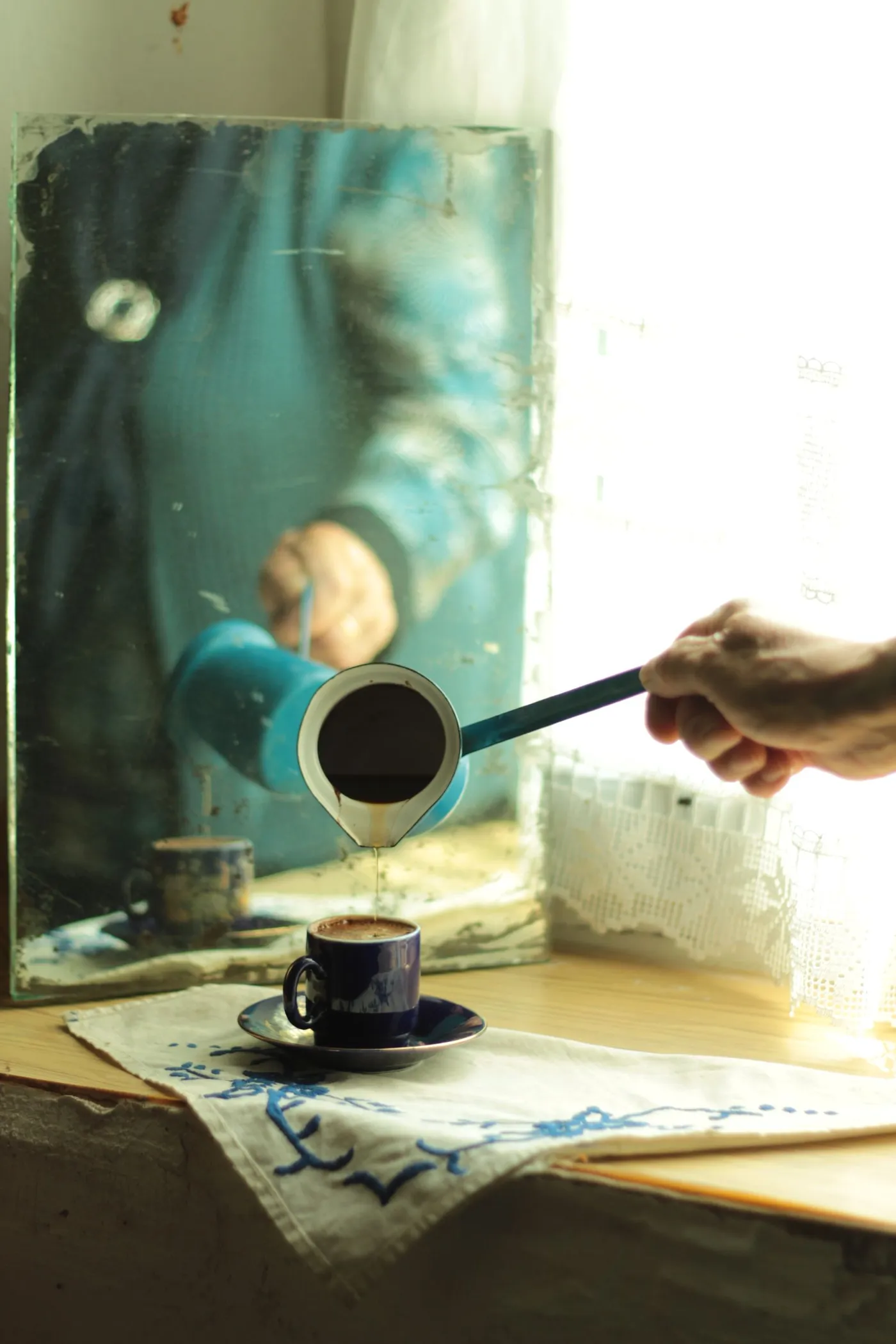
Is Arabic Coffee the Same as Turkish Coffee?
The Lebanese kind is. Same powder-fine grind, same small pot, same slow heat, same foam, same grounds resting at the bottom of the cup. The practical difference is the cardamom, which most Levantine households add and many Turkish ones leave out. The pot changes name from country to country (cezve in Turkey, rakweh in the Levant, briki for Greek coffee) but it is the same tool. Even in Egypt and parts of the Levant the same cup is sold as Turkish coffee.
Gulf qahwa is not the same drink. The roast is lighter, the spice is stronger, the coffee simmers far longer, and it is poured without its grounds from a dallah. If you have had pale, cardamom-heavy coffee with dates in a Gulf home or hotel, that was qahwa. If you have had a small, dark, foamy cup in a Lebanese restaurant, that was the Levantine cup, and it is made exactly like Turkish coffee.
The same cup travels under other names too, Bosnian coffee and Armenian coffee among them. Our guide to Turkish, Greek and Arabic coffee history follows it from Yemen to each of them.
How Arabic Coffee Is Served: The Etiquette
In the Gulf, how qahwa is poured matters as much as how it is made. The customs are old and consistent from Oman to Kuwait:
- The server stands. The dallah is held in the left hand and a stack of finjan cups in the right.
- The eldest or most honored guest is served first, then the coffee moves around the room to the right.
- A quarter full, never more. A small pour is a courtesy: it keeps the coffee hot and keeps the host coming back. A brimming cup was once a hint that the guest should be on their way.
- Take it with your right hand. Hold the cup until you hand it back rather than setting it down.
- Refills keep coming until you give the empty cup a small side-to-side shake. One to three cups is customary; turning down the first is considered impolite.
- Dates come alongside, because the coffee carries no sugar. In Ramadan, coffee and dates are how the fast is broken at sunset.
The Levantine cup is less formal. It arrives after a meal or with a visit, a glass of water beside it, and the host's question is about sugar rather than refills.
Where Arabic Coffee Comes From
Coffee drinking began in Yemen, where Sufi communities brewed it by the late 1400s to stay awake through night devotions. Yemen grew the beans and shipped them from the Red Sea port of Mocha, and the drink moved north to Mecca, Cairo and Damascus in the early 1500s. Mecca's authorities tried to ban it in 1511; the ban did not last. The Arabic word qahwa went with it, becoming kahve in Turkish, koffie in Dutch and coffee in English. Yemen still drinks a cousin of the original, qishr, brewed from the dried husks of the coffee cherry with ginger.
In the Gulf, Arabic coffee is a symbol of generosity. The roasting, the pouring and the hospitality around the dallah are a custom of their own, kept from the Emirates and Saudi Arabia to Oman, Qatar and Jordan.
Arabic Coffee Pot: The Dallah and the Rakweh
Which pot you need depends on which Arabic coffee you mean.
The dallah is the tall Gulf coffee pot with a beak-like curved spout and a pointed lid, made in brass, copper or silver. Traditional households use more than one: a large dallah to brew the coffee, a middle one to settle and spice it, and a small one to serve. It is so tied to hospitality that it appears on the UAE's one-dirham coin. If you search for an Arabic coffee pot to serve qahwa, the dallah is the one; at home, many Gulf families now brew in a saucepan and serve from a thermos.
The rakweh (also rakwa or rakwe) is the Levantine pot: small, long-handled, wide at the base and narrow at the neck. The narrow neck concentrates the foam and the handle keeps your hand off the heat. A Turkish cezve works the same way, so if you already own one you already own the right pot. Our guide to the best Turkish coffee pot covers sizes and materials; a 12 oz pot makes two to three small cups.
The finjan is the cup for both: small, and in the Gulf handleless, held at the rim between thumb and fingers.
How Much Caffeine Is in Arabic Coffee?
Less than its strength suggests. A Lebanese-style cup made with 7 g of coffee carries roughly 50 to 65 mg of caffeine, about the same as a single espresso and well under a mug of drip. A quarter-full finjan of Gulf qahwa is only a few sips of a lighter brew, commonly estimated at 15 to 40 mg a cup, so even the customary three cups add up to less than one mug. Our Turkish coffee caffeine guide has the full comparison.
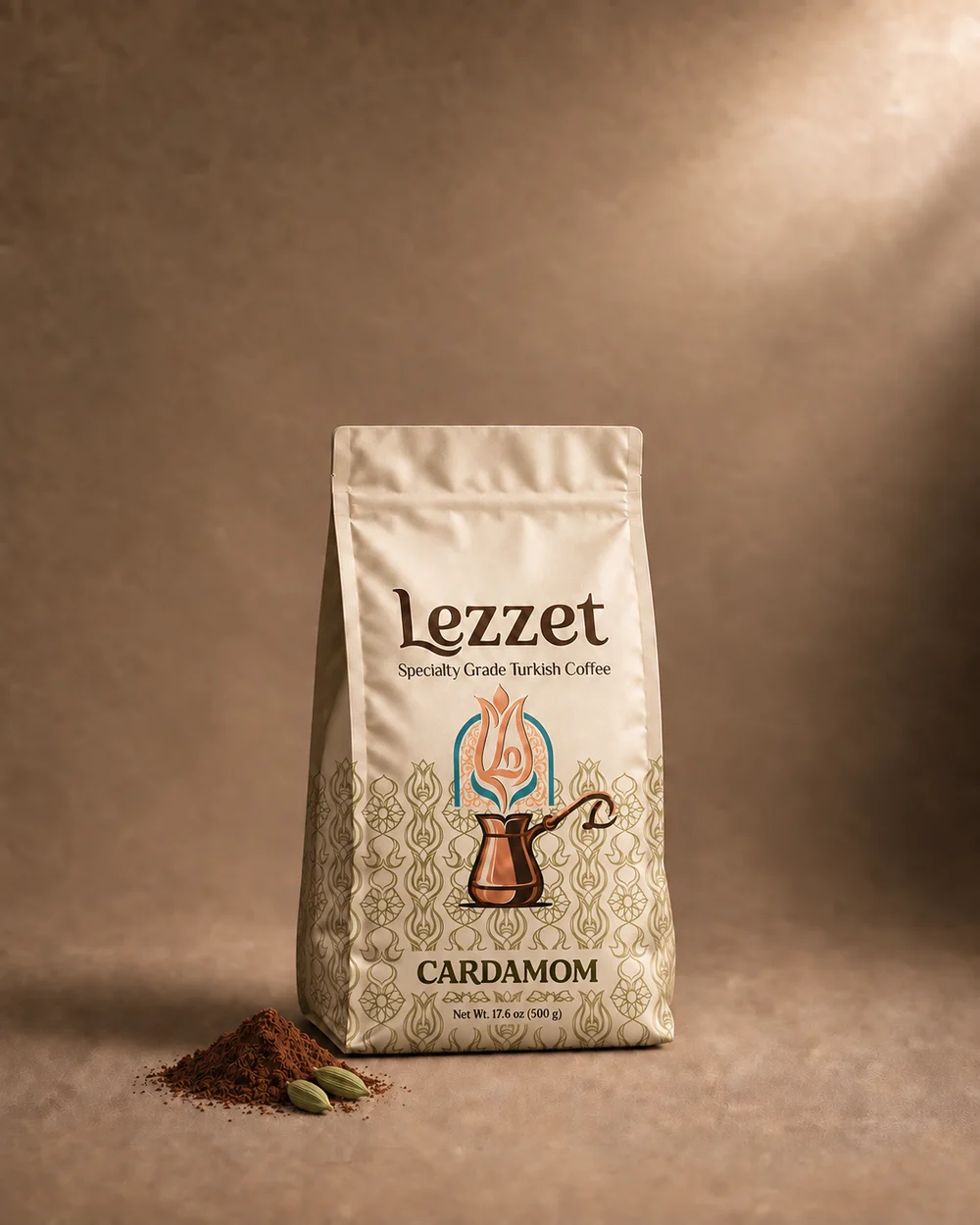
What Is the Best Arabic Coffee to Buy?
Decide which cup you want first, because the two need different coffee.
For Gulf qahwa, buy lightly roasted coffee sold as Saudi or Gulf coffee, whole or ground for the dallah, and add your own cardamom and saffron. Dark or powder-fine coffee will not give you the pale gold color or the clean pour.
For the Lebanese cup, you want three things. A powder-fine grind, because nothing filters it out. Cardamom, ground in or added. And a roast that is dark, or a blend of light and dark, which is how Levantine Arabic coffee has long been made.
That last part is exactly how Lezzet Cardamom is made, which is why it suits the Lebanese cup. We start with two specialty-grade arabicas, and a licensed Q Grader scored the coffee 84. The rich one grows at a lower elevation: low in acidity, with notes of dark chocolate and nut. We roast it dark for depth. The bright one grows higher and we roast it lighter to keep its lift. Each is roasted on its own, then blended, and organic cardamom is ground in with the coffee. The cardamom brings bright, citrusy notes that sit on top of the dark chocolate, a pairing with deep roots in the Middle East.
Every bag is roasted in small batches, fresh-roasted in the USA, and ground powder-fine for the rakweh or cezve. If you prefer to add your own spice, Lezzet Traditional is the same two-roast blend without it. And if you do not own a pot yet, the Turkish Coffee Kit pairs a 12 oz cezve with all three flavors: Traditional, Cardamom and Cinnamon.
Arabic Coffee FAQ
What is Arabic coffee?
Arabic coffee is coffee brewed with cardamom and poured for guests across the Arab world, and it comes in two styles. In the Gulf it is qahwa: lightly roasted coffee with plenty of cardamom, often saffron, poured from a dallah into small handleless cups with dates. In Lebanon, Syria, Jordan and Palestine it is a dark, powder-fine coffee, often with cardamom, brewed in a small long-handled pot the same way as Turkish coffee.
Is Arabic coffee the same as Turkish coffee?
The Levantine kind is, apart from the cardamom that usually goes in. It uses the same powder-fine grind, the same small pot and the same slow heat. Gulf qahwa is a different drink: lighter roasted, spiced more heavily, and poured without its grounds from a dallah.
What is the difference between qahwa and gahwa?
None. Qahwa is the Arabic word for coffee, and gahwa is how it is pronounced across much of the Gulf. Both usually mean the light-roasted, cardamom-spiced coffee poured from a dallah.
How much cardamom goes in Arabic coffee?
It depends on the style. Gulf gahwa is heavily spiced: roughly one part ground cardamom to two or three parts coffee, about a tablespoon of pods for a pot of eight small cups. The Lebanese cup uses far less, about ⅛ teaspoon of ground cardamom or one or two crushed pods for a 7 g cup, around 5% of the coffee.
What pot is used for Arabic coffee?
Gulf qahwa is brewed and served from a dallah, a tall pot with a long curved spout. Levantine Arabic coffee is made in a rakweh (also spelled rakwa), a small long-handled pot with a narrow neck that works like a Turkish cezve.
Why do you shake the cup after drinking Arabic coffee?
In Gulf coffee etiquette, a small side-to-side shake of the cup tells the host you have had enough. Until you do, the cup keeps being refilled.
What does Arabic coffee taste like?
Gulf qahwa tastes closer to a spiced tea than to a dark coffee: light-bodied and sharp with cardamom, with a citrus-and-mint lift and a faint honeyed, floral finish when saffron goes in. The Levantine cup is darker and thicker, with the cardamom sitting on a base of dark chocolate.
How much caffeine is in Arabic coffee?
A Lebanese-style cup, made with about 7 g of coffee, has roughly 50 to 65 mg of caffeine, about the same as a single espresso. A quarter-full finjan of Gulf qahwa is only a few sips of a lighter brew, often estimated at 15 to 40 mg, and guests usually take one to three cups.
Is Arabic coffee served with sugar?
Gulf qahwa is served without sugar; the sweetness comes from the dates eaten alongside it. Levantine Arabic coffee can be made with or without sugar, which goes into the pot before brewing: sada (none), wasat (medium) or hilweh (sweet).
Why is Arabic coffee served with dates?
Qahwa is poured without sugar, so the date is the sweet bite between sips. Dates and coffee are also the first two things a Gulf host sets out for a guest, before any meal, and the pair breaks the fast at sunset in Ramadan.
How do you serve Arabic coffee?
The server stands, holding the dallah in the left hand and the stack of cups in the right, and pours each finjan about a quarter full. The oldest or most honored guest is served first, then the service moves around the room. Take the cup with your right hand; it will be refilled until you give it a small shake. One to three cups is customary.
What is the best Arabic coffee to buy?
It depends on the cup. For Levantine Arabic coffee, the Lebanese-style cup, buy a powder-fine coffee with cardamom: Lezzet Cardamom is two specialty-grade arabicas, one roasted dark and one lighter, with organic cardamom ground in, scored 84 by a licensed Q Grader and ground powder-fine for a rakweh or cezve. Café Najjar and Al Ameed are the familiar Lebanese and Jordanian names. For Gulf qahwa, buy a light-roasted Saudi or Gulf coffee instead.
Can I use Turkish coffee to make Arabic coffee?
For the Levantine style, yes. It is the same powder-fine grind, so any good Turkish coffee works; add cardamom, or choose one with cardamom already ground in. Gulf qahwa needs lightly roasted coffee made for it.