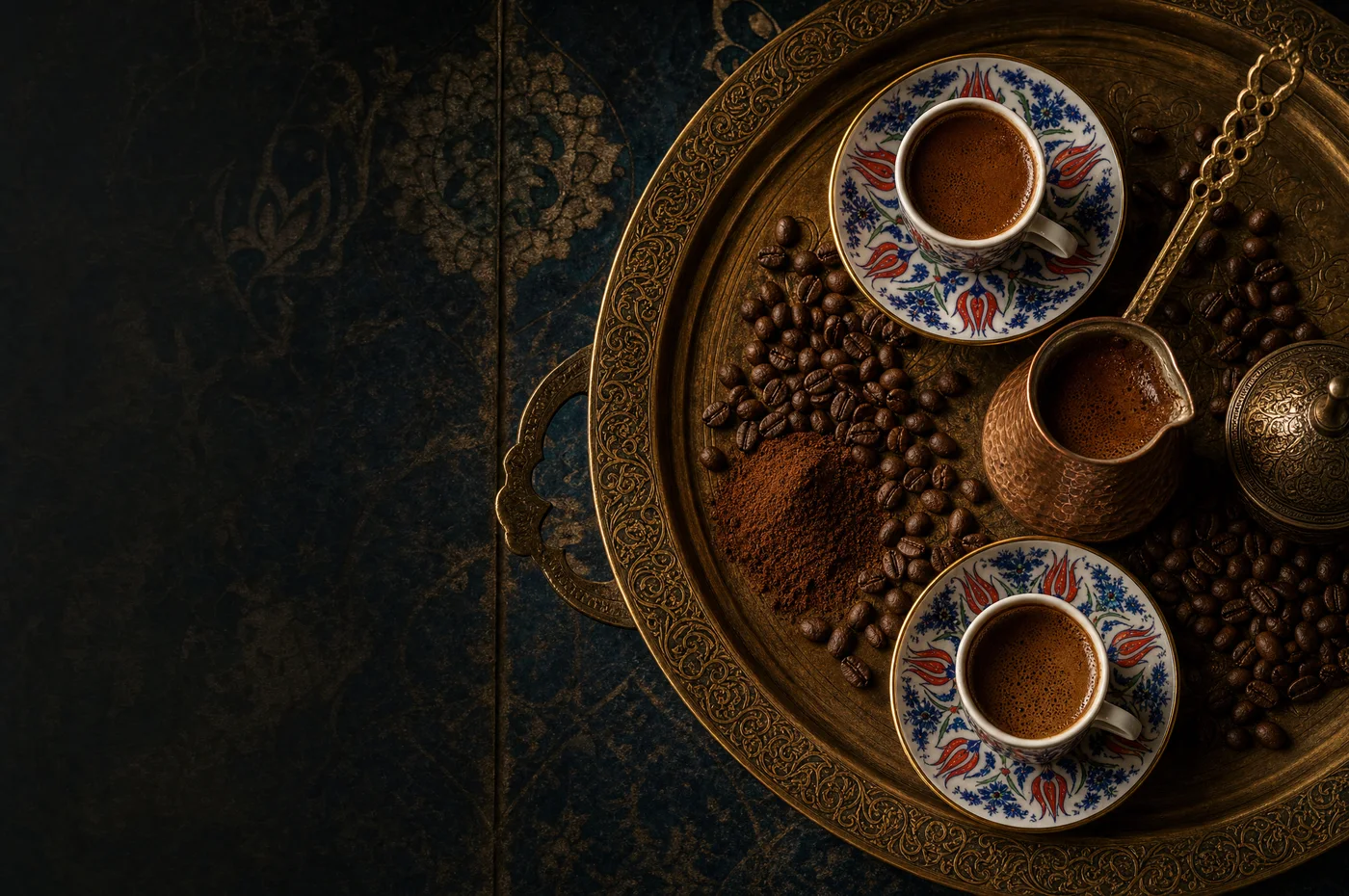
Nearly five hundred years after Istanbul's first coffeehouses, it is still one of the few ways of making coffee you can do with a pot and a stove. This page is the plain introduction: what is in the cup, how it tastes, how strong it is, how it compares with your usual coffee, and the handful of Turkish words that come with it.
What Is in a Cup of Turkish Coffee?
Three layers, and each one has a job.
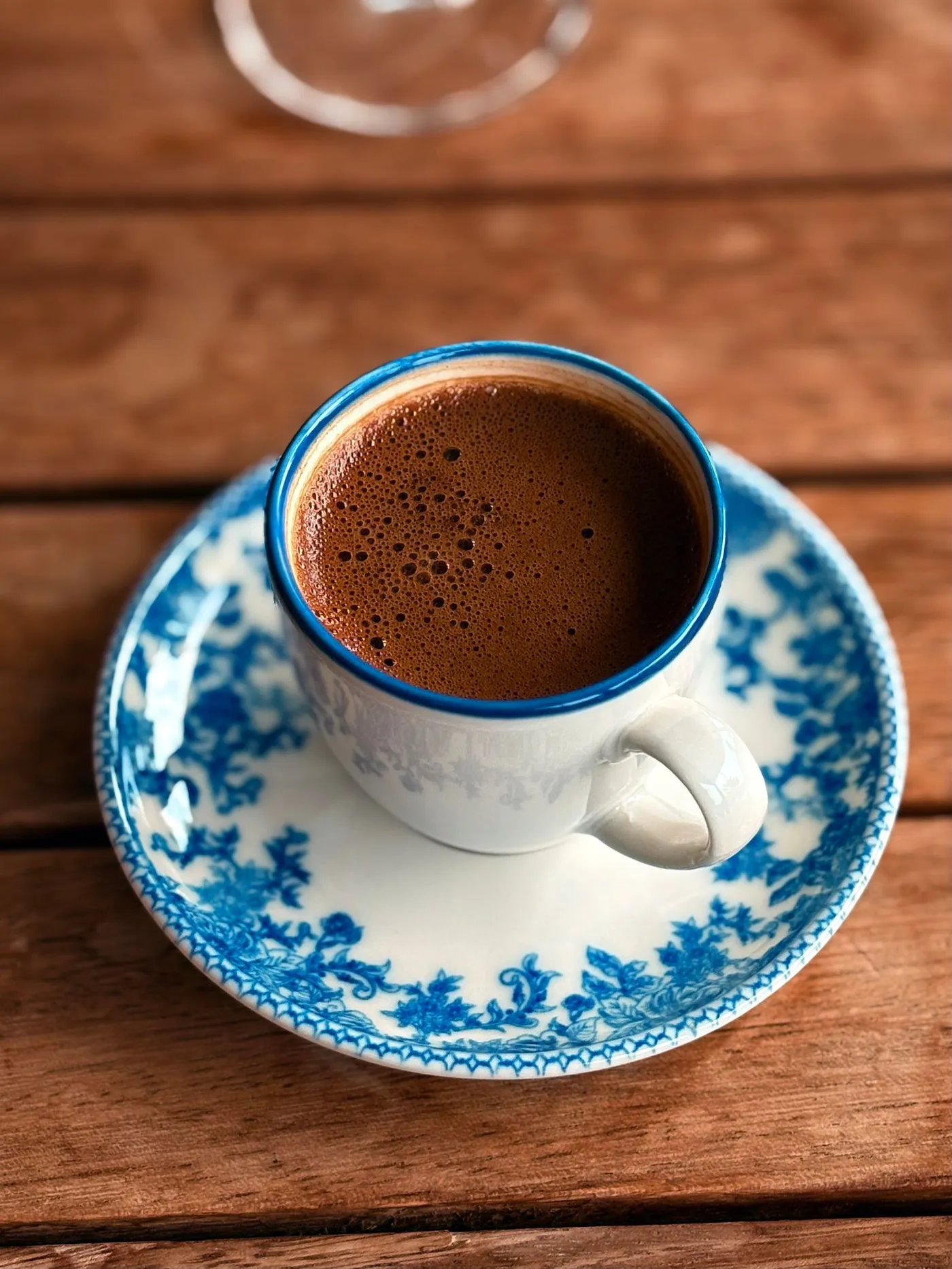
The foam (köpük). A fine, cocoa-colored layer that forms while the coffee warms slowly and is spooned into the cup first. It holds the aroma, and it is how the cook is judged: in Turkey, serving a cup without foam has long been read as careless.
The coffee. Small, about 60 to 70 ml, and thicker than filtered coffee, because the oils and the finest particles stay in it. Sugar, if any, was brewed in.
The grounds (telve). A soft layer at the bottom. You let them settle for a minute, sip from the top, and stop when you reach them. Some people then flip the cup onto its saucer and read the shapes, a game called fal.
What Does Turkish Coffee Taste Like?
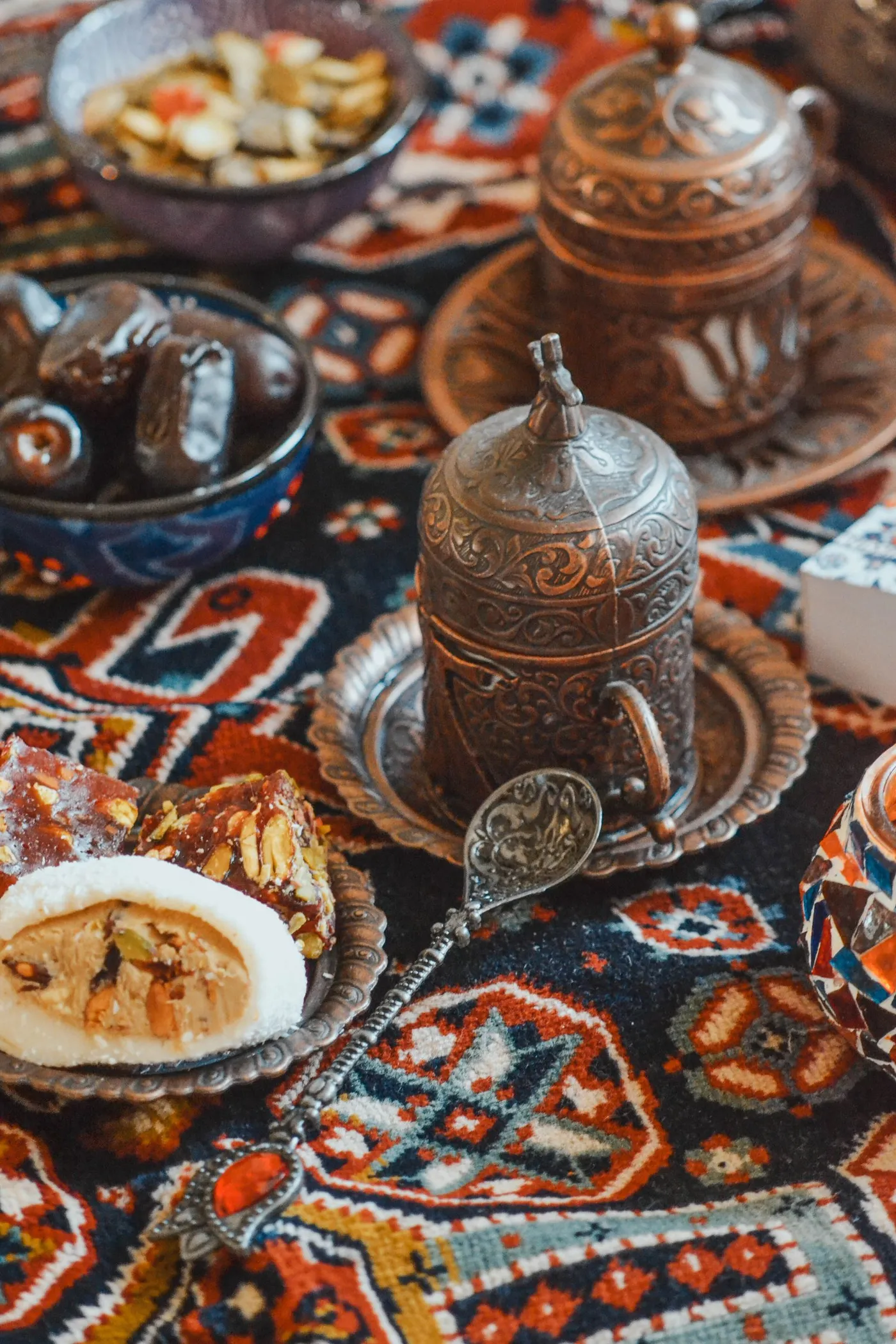
Deep and aromatic, with more body than drip and a slower, softer finish than espresso. Because nothing is filtered out, the coffee's oils stay in the cup, and the texture is closer to velvet than to water.
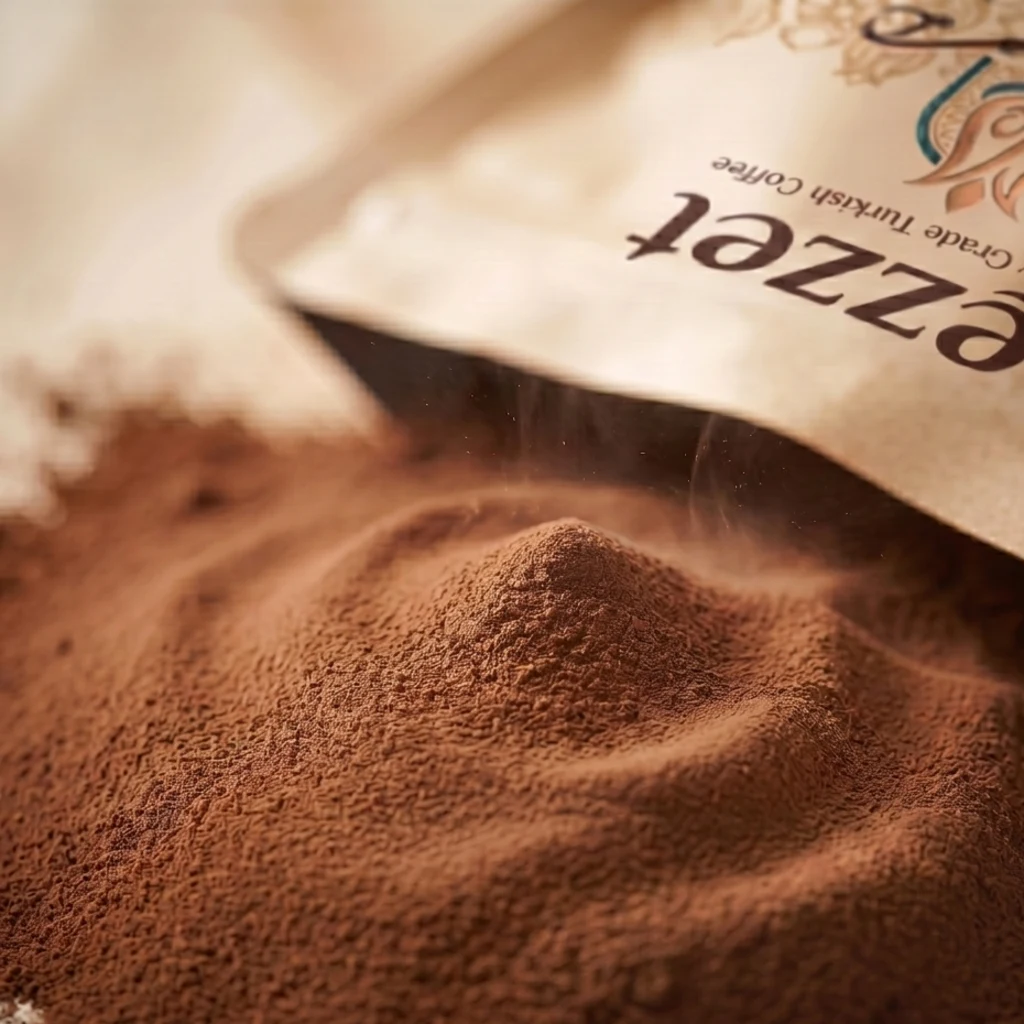
The bag decides the rest. A fresh, well-roasted Turkish coffee tastes of dark chocolate and nut, with a foam that holds. Powder-fine coffee gives up its aroma faster than any other grind, which is why freshness matters more here than anywhere. Sugar changes it too. Ordered orta, with about a teaspoon brewed in, the edges round off and the chocolate comes forward.
How Strong Is Turkish Coffee?
Strong in the mouth, ordinary in caffeine. A small Turkish cup has about 50 to 65 mg, close to an espresso shot and less than a 240 ml mug of drip coffee, which carries about 80 to 100 mg. It tastes stronger because it is concentrated, unfiltered and thick. Full numbers are in our Turkish coffee caffeine guide.
Turkish Coffee vs Regular Coffee vs Espresso
| Detail | Turkish | Drip | Espresso |
|---|---|---|---|
| Grind | Powder-fine | Medium | Fine |
| How it brews | Coffee and cold water warmed together on low heat | Hot water passes through the grounds | Pressure pushes hot water through a packed puck |
| Filter | None | Paper or mesh | Metal basket |
| Serving | 60–70 ml in a small cup | A 240 ml mug | A 30 ml shot |
| Caffeine | About 50–65 mg | About 80–100 mg | About the same as a Turkish cup |
| On top | Foam (köpük) | Nothing | Crema |
The short version: drip and espresso both separate the coffee from the grounds, one with a filter and one with pressure. Turkish coffee never does. Our side-by-side of Turkish coffee vs espresso goes deeper into the history, the tools and the strength.
Does Turkish Coffee Have to Come from Turkey?
No. Coffee does not grow in Turkey. "Turkish" names the method, the same way "espresso" names a method rather than a birthplace. The beans come from the coffee belt: our own blend pairs a rich, darker-roasted coffee from Brazil with a brighter, lighter-roasted one from Ethiopia.
What matters far more than the country on the label is that the beans are good, freshly roasted and ground powder-fine. With no filter, everything in the bean ends up in the cup. Our guide to the best coffee beans for Turkish coffee covers what to look for.
Turkish Coffee Words to Know
- Cezve
- The pot. Also called an ibrik in English, a briki in Greece and a džezva in Bosnia.
- Köpük
- The foam, the sign of a cup made with care.
- Telve
- The grounds left at the bottom of the cup, and what a fal reading reads.
- Fincan
- The small cup, usually handled and set on a saucer.
- Sade, az şekerli, orta, şekerli
- How you order it: no sugar, a little, medium, sweet. The sugar is brewed in, so it is decided before the heat.
- Lokum
- Turkish delight, the sweet served beside the cup.
- Kahvehane
- The coffeehouse. Istanbul had its first in the 1550s.
- Fal
- Reading the grounds after the cup is finished, a game among friends.
Where Turkish Coffee Comes From, in Brief
Coffee was first drunk in Yemen in the 1400s and reached Istanbul in the mid-1500s, where the city's first coffeehouses opened around 1554. The powder-fine, unfiltered cup spread from there across the Ottoman lands, which is why the same coffee goes by Greek, Bosnian, Armenian and Arabic names today. The full story is in One Coffee, Many Names, and the route the beans took is in our history of Ottoman coffee trade routes. It has been poured in the US since at least 1876; that chapter is Turkish coffee in America.
How Turkish Coffee Is Made, in Brief
Cold water, 7 g of powder-fine coffee and any sugar go into the cezve together. One stir, the lowest heat, and the pot comes off as the foam climbs to the rim. Foam into the cup first, then the coffee, then a minute to let it settle. The full recipe, with fixes for thin foam, is in how to make Turkish coffee.
Coffee as Hospitality
In Turkey the cup is an excuse to sit down. A Turkish proverb says one cup of coffee commits you to forty years of friendship, and in one marriage custom the bride-to-be makes coffee for the groom's family, sometimes slipping salt into his cup to see how he takes it. The coffee is the occasion; the conversation is the point.
Turkish Coffee FAQ
What is Turkish coffee in simple terms?
Coffee ground as fine as powder, warmed slowly with cold water (and sugar, if you take it) in a small pot called a cezve, and poured unfiltered with its foam on top. The grounds sink to the bottom of the cup and stay there.
Is Turkish coffee stronger than regular coffee?
It tastes stronger, because it is unfiltered and served small and thick. A small Turkish cup has about 50–65 mg of caffeine, which is close to an espresso shot and less than a 240 ml mug of drip (about 80–100 mg).
Do you drink the grounds in Turkish coffee?
No. Give the cup a minute so the grounds settle, sip from the top, and stop when you reach the thick layer at the bottom.
What makes Turkish coffee Turkish?
The method, not the beans. "Turkish coffee" names the powder-fine grind and the unfiltered cezve brew, the way "espresso" names a method. The beans come from coffee-growing countries; what matters is that they are good, freshly roasted and ground powder-fine.
Is Turkish coffee the same as Greek or Arabic coffee?
Greek coffee is made the same way under another name, usually with a slightly lighter roast. The Lebanese cup called Arabic coffee is the same method with cardamom in the pot; Gulf Arabic coffee (gahwa) is a different drink, a light roast simmered with cardamom and saffron.
Can you make Turkish coffee without a cezve?
Yes. The smallest saucepan you own works, best for two cups or more so the coffee sits deep enough for the foam to rise. Keep the same cold water, powder-fine coffee and low heat.