Bosnian coffee shares its grind and its pot with Turkish coffee. What sets it apart is the order of things, and a pace of drinking Bosnians have their own word for. Below: what makes the cup Bosnian, the džezva, the method step by step, the tray it comes on, the sugar-cube ritual, and which coffee to buy for it.
What Is Bosnian Coffee?
Bosnian coffee is the everyday coffee of Bosnia and Herzegovina, made in the same family of methods the rest of the world knows as Turkish coffee. It arrived with the Ottomans, who ruled Bosnia from 1463 until 1878. Coffeehouses spread through the Ottoman cities of the Balkans in the 1500s, Sarajevo among them, and over four centuries Bosnians made the cup their own: the same powder-fine grind, with a method, a serving set and a pace of drinking that are distinctly Bosnian.
In Bosnia it is kahva. Across the rest of the region you will hear kafa or kava, and the coffeehouse is a kafana, a word that comes from the Turkish kahvehane. The old bazaar of Sarajevo, Baščaršija, is still the city's coffee quarter.
Bosnians also have a word for the way it is drunk: ćejf, which translates roughly as leisure or pleasure. Coffee here is not something you finish standing up. It is a reason to sit down with family or friends, and the cup sets the pace of the conversation.
Is Bosnian Coffee the Same as Turkish Coffee?
Nearly. Both start with coffee ground finer than espresso, both are made in a small long-handled pot, both are judged by their foam, and both reach the cup unfiltered, with the grounds settling to the bottom. Both come with a glass of water.
The difference is the order. For Turkish coffee, the coffee, cold water and sugar go into the pot together and heat slowly until the foam rises. In the traditional Bosnian method, the water goes into the džezva first and is heated on its own until it bubbles. A little of it is poured off and set aside, the coffee is stirred in off the heat, and the pot goes back on only briefly, until the foam climbs the neck. Many cooks then add back the water they set aside and bring the foam up once more for a thicker head. Bosnians call that foam kajmak.
Two smaller differences follow from it. The sugar never goes into the pot; it comes on the side as cubes. And many Bosnian cooks use a little less coffee per cup than a Turkish recipe does. The same cup carries a different name in nearly every country the Ottomans reached, and our guide to Turkish, Greek and Arabic coffee history follows it from one to the next. Travel south to Beirut and the same cup comes with cardamom as Arabic coffee.
What Is a Džezva?
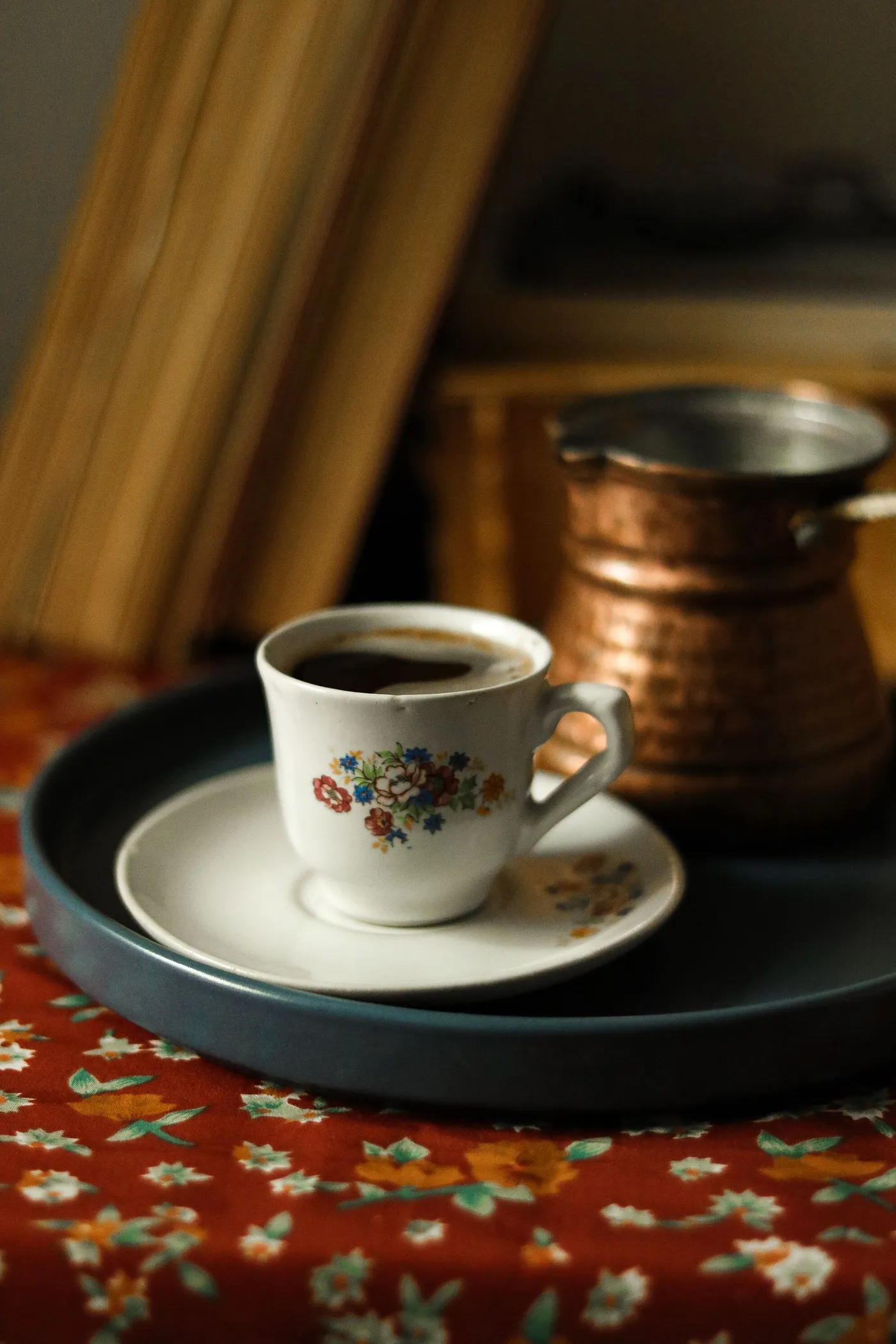
A džezva (said roughly JEZ-vah, and often typed dzezva) is the Bosnian coffee pot: small, wide at the base, narrow at the neck, with a long handle and a pouring lip. Traditional ones are copper, hand-hammered and often engraved. The wide base spreads the heat, the narrow neck squeezes the foam into a thick layer, and the long handle keeps your hand away from the stove.
It is the same pot the Turks call a cezve and the Greeks call a briki. The Bosnian difference is that the džezva goes to the table with the coffee still in it, so it is part of the serving set as much as a kitchen tool.
Buy one sized for the number of cups you usually make. A 12 oz pot makes two to three small cups. Our guide to the best Turkish coffee pot compares copper and stainless steel, and everything in it applies to a džezva.
How Do You Make Bosnian Coffee?
Bosnian coffee takes a few minutes and one pot. These steps follow the Bosnian order, written the way we brew it.
Measure. For each cup, pour one fildžan of cold water (60 to 70 ml) into the džezva, plus an extra splash. Have about 7 g of powder-fine coffee ready per cup, one heaping teaspoon.
Heat the water. Set the džezva over medium heat and let the water get hot right through, until small bubbles break at the edges.
Set a little aside. Pour a spoonful or two of the hot water into a cup and keep it next to the stove.
Add the coffee off the heat. Lift the džezva off the heat, spoon in the coffee and stir until the powder is wet through.
Back on, briefly. Return the džezva to low heat. When the kajmak climbs toward the rim, lift it off. Add the water you set aside and, if you like a thicker head, let the foam rise once more.
Pour slowly. Spoon a little kajmak into each fildžan, then pour the rest down the side, or bring the džezva to the table and let each person pour. Give it a minute for the grounds to settle.
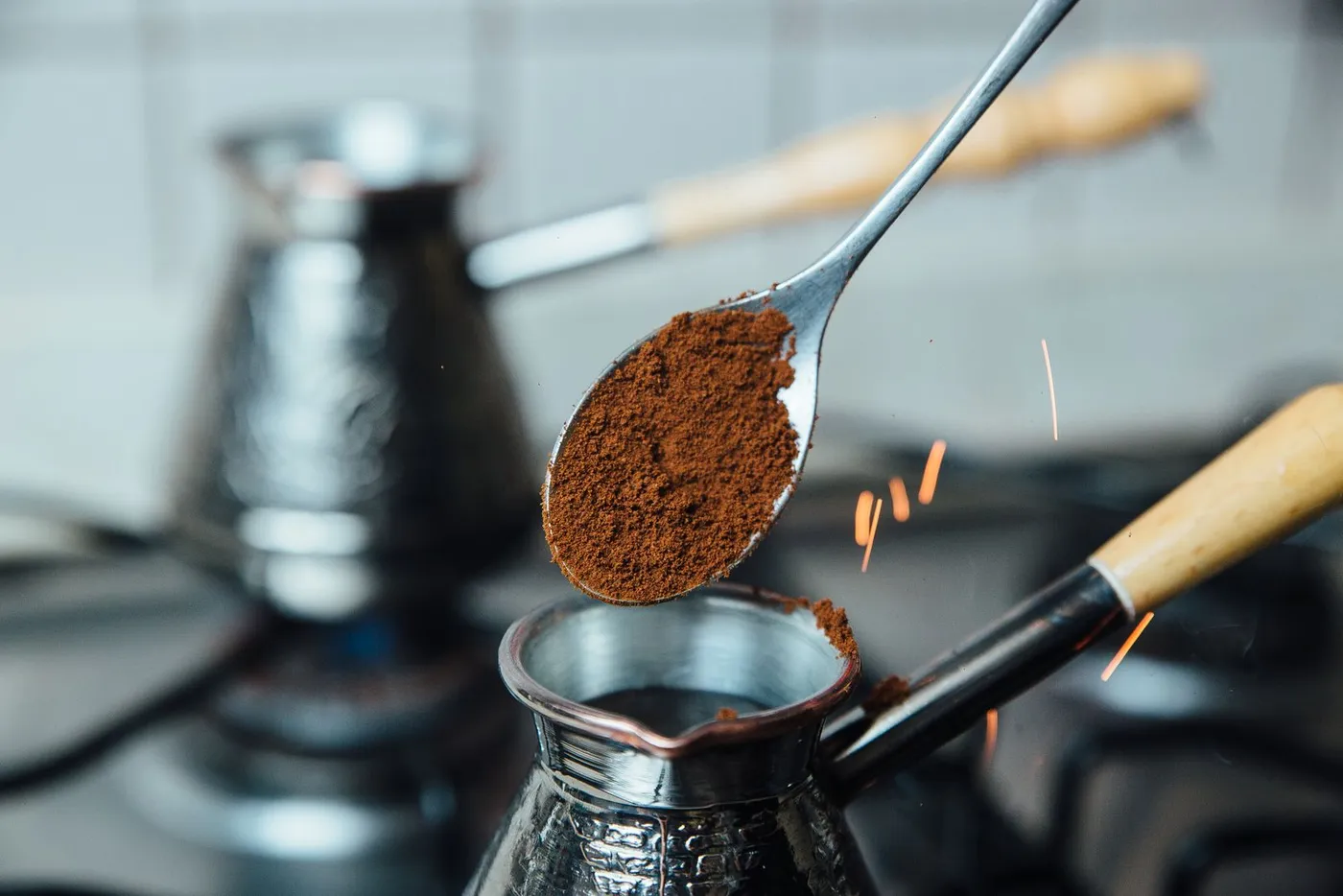
The step that decides the cup is the last one on the heat. Stay with the pot, and lift it off as soon as the foam rises. If you would rather start everything cold, the same coffee and the same džezva make an excellent cup by our Turkish coffee method.
How Is Bosnian Coffee Served?
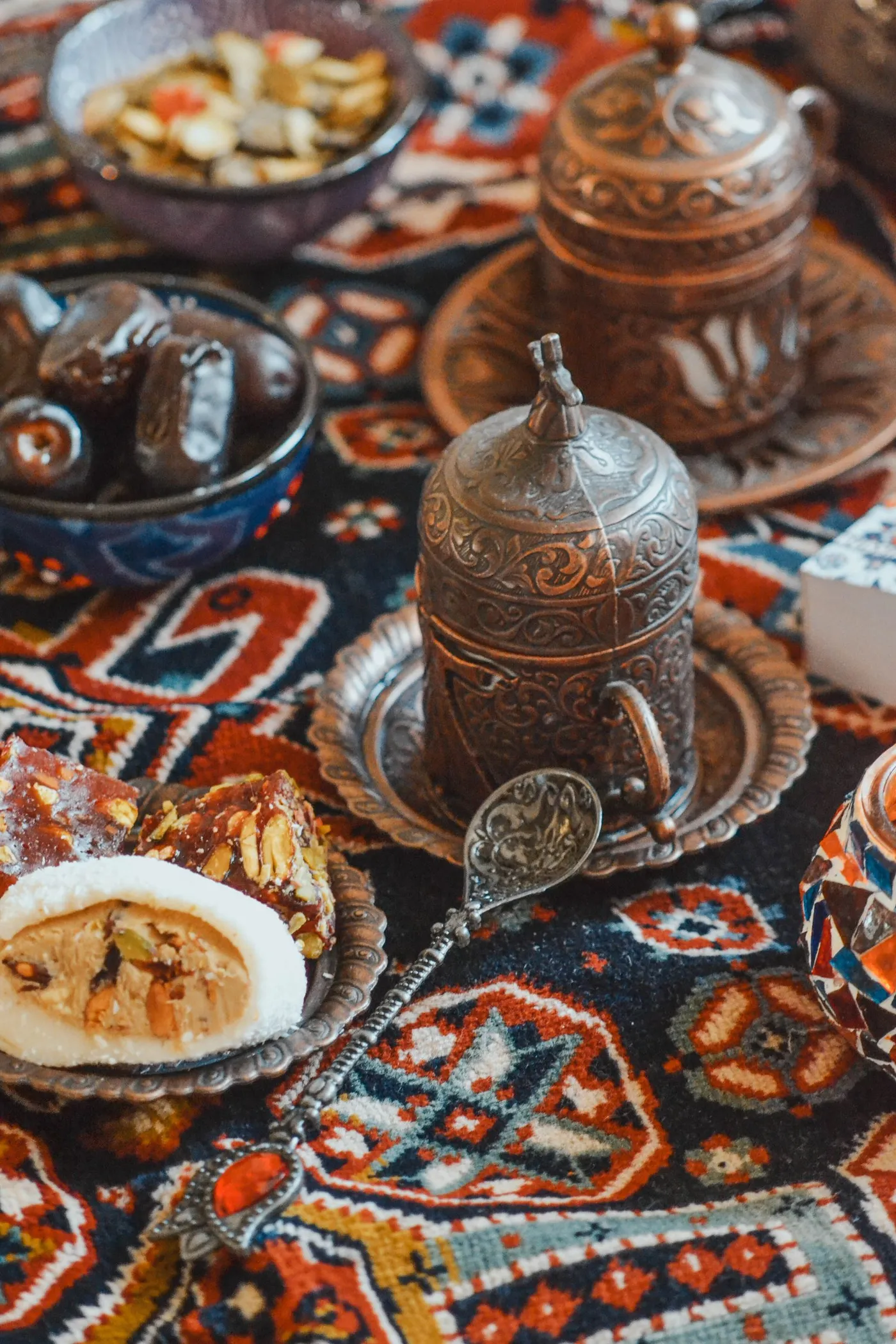
Bosnian coffee comes as a set, carried to the table on one tray:
- Tepsija
- The round tray, usually copper, often hand-hammered and engraved, that carries everything to the table.
- Džezva
- The long-handled pot. In Bosnia it comes to the table with the coffee still in it.
- Fildžan
- A small cup with no handle, the size of one serving.
- Šećerluk
- A lidded sugar bowl filled with sugar cubes, because the sugar is never brewed in.
- Rahat lokum
- Turkish delight, a piece or two on the side.
- Water
- A glass of cold water to go with the coffee.
The pieces usually match, in copper or silver, and the finest sets are hammered and engraved by hand.
How Do You Drink Bosnian Coffee?
Slowly, which is the whole point. The kajmak goes into the fildžan first, then the coffee, poured gently from the džezva so the grounds stay behind.
The sugar has its own ritual. Instead of stirring it in, you dip a corner of a sugar cube into the coffee, bite off the wet corner, and sip while it melts. Some people tuck the cube under the tongue and drink the coffee through it. Either way, the coffee in the cup stays as it was brewed, and each sip can be as sweet or as plain as you like.
A piece of rahat lokum goes between sips, and the glass of water is there to refresh the palate. When you reach the grounds at the bottom, the cup is finished.
What Coffee Should You Use for Bosnian Coffee?
Three things decide the cup in a džezva:
A powder-fine grind. Nothing filters Bosnian coffee, so the grind has to be finer than espresso. Coarser coffee gives a thin cup and a weak kajmak.
Freshness. Powder is as ground as coffee gets, and ground coffee loses its aroma faster than whole beans. The fresher the roast, the thicker the foam.
The bean. Specialty-grade arabica gives a sweeter, cleaner cup, and in an unfiltered coffee the bean has nowhere to hide.
Lezzet Traditional works in a džezva as it is. It starts with two specialty-grade arabicas, and a licensed Q Grader scored the coffee 84. The rich one is low in acidity, with notes of dark chocolate and nut, and we roast it dark for depth. The bright one we roast lighter to keep its lift. Each is roasted on its own, then blended, fresh-roasted in the USA in small batches and ground powder-fine. Bosnian coffee is drunk plain, with the sugar on the side, and that is where the dark chocolate shows.
If you do not own a džezva yet, the Turkish Coffee Kit pairs a 12 oz pot with all three flavors: Traditional, Cardamom and Cinnamon.
Bosnian Coffee FAQ
How do you make Bosnian coffee?
Heat one fildžan of cold water (60–70 ml) per cup, plus a splash, in a džezva until small bubbles break at the edges. Set a spoonful of the hot water aside, take the pot off the heat and stir in 7 g of powder-fine coffee per cup. Put it back on low heat, lift it off as the kajmak rises, add the water you set aside and pour, kajmak first.
What is Bosnian coffee?
Bosnian coffee (bosanska kahva) is a small, strong, unfiltered coffee made from powder-fine grounds in a džezva, a little long-handled pot. It is served on a tray with a handleless cup called a fildžan, sugar cubes, rahat lokum and a glass of water.
What is the difference between Bosnian and Turkish coffee?
The grind, the pot and the foam are the same. The order is different: for Turkish coffee, the coffee, cold water and sugar go into the pot together and heat slowly. For Bosnian coffee, the water is heated first, a little is set aside, the coffee goes in off the heat, and the pot returns to the heat briefly until the foam rises. Bosnians also take their sugar on the side, as cubes.
What is a džezva?
A džezva (often typed dzezva) is the Bosnian coffee pot: small, wide at the base, narrow at the neck, with a long handle, usually made of copper. It is the same pot the Turks call a cezve and the Greeks call a briki.
How do you drink Bosnian coffee with a sugar cube?
Dip a corner of the sugar cube into the coffee, bite off the wet corner, and sip the coffee while the sugar melts. Some people hold the cube under the tongue instead. The sugar is never stirred into the cup.
What is the foam on Bosnian coffee called?
Kajmak. A little of it is spooned into each fildžan before the rest of the coffee is poured, so every cup gets its share.
What is the best coffee for Bosnian coffee?
For a fresh-roasted specialty-grade coffee, Lezzet Traditional is ground powder-fine for a džezva: two specialty-grade arabicas, one roasted dark and one lighter, scored 84 by a licensed Q Grader and roasted in small batches. Drink it plain with the sugar on the side and the dark chocolate shows. Zlatna Džezva from Vispak is the best-known Bosnian brand.
Do you put sugar in Bosnian coffee?
Not in the pot. Bosnian coffee is brewed plain and the sugar comes on the side as cubes in a šećerluk, so each person sweetens their own sips. That is the opposite of Turkish and Greek coffee, where the sugar is brewed in.
Can I use Turkish coffee to make Bosnian coffee?
Yes. Bosnian coffee uses the same powder-fine grind, so any good Turkish coffee goes straight into a džezva. Only the method changes.