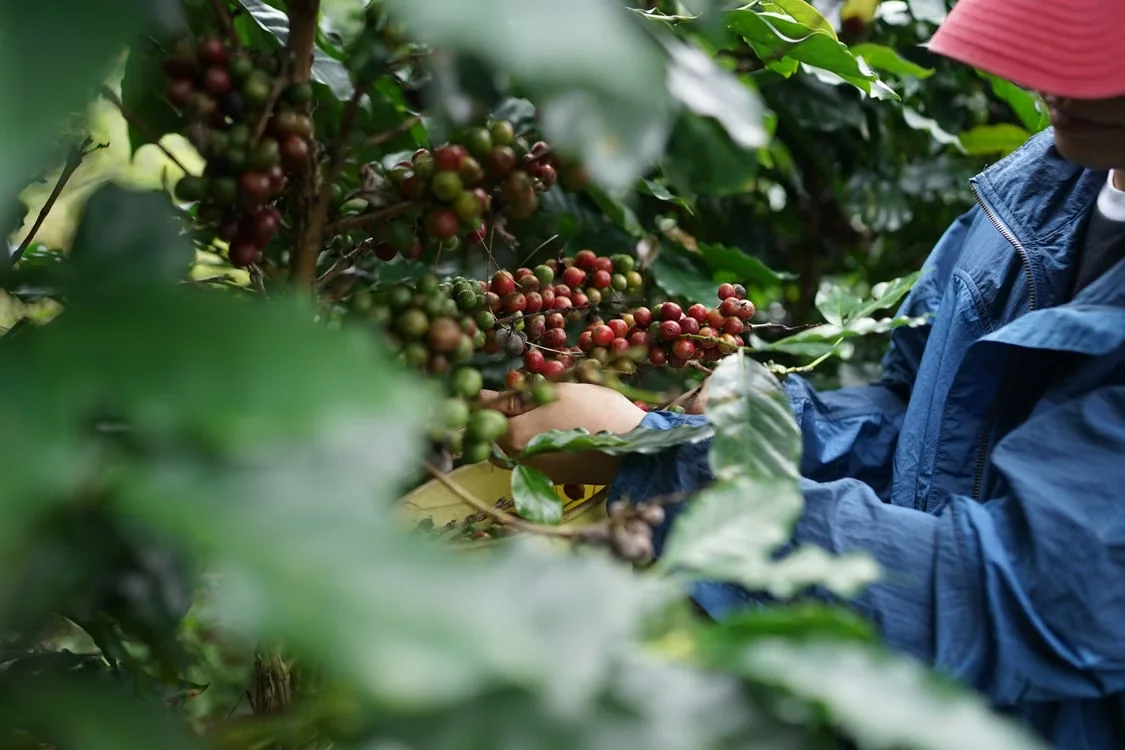
Coffee comes from a shrub. Specifically, from the seed of a small red fruit on a plant that grows wild in the highland forests of southern Ethiopia, and that people in Yemen first brewed into a drink in the 1400s.
I run a Turkish coffee company, so I think about that seed every day. This series follows it from the tree to your cup, one part at a time. Part 1 starts where coffee does: on a branch.
What Is a Coffee Bean, Really?
It is not a bean. It is a seed.
The coffee plant grows a small round fruit called a cherry, picked when it turns deep red. Inside, under a thin layer of sweet pulp, sit two seeds pressed flat against each other. Strip off the fruit, dry the seeds, roast them, and you have what the world calls coffee beans.
What Does the Coffee Plant Look Like?
Picture a shrub with glossy dark leaves, pruned low on a farm so people can pick it by hand. Small white flowers. Then clusters of cherries packed along each branch, ripening at different speeds, so pickers pass the same tree again and again.
It is patient. A new tree takes about three years to bear its first fruit, and a good one keeps going for decades.
Where Did Coffee First Grow?
In the forests of southern Ethiopia. Arabica, the species behind most of the coffee people drink, grows wild there still, in the shade of taller trees. Botanists also find wild populations in South Sudan and Yemen.
Arabica has an interesting family tree. It is a natural cross between two other coffee species, one of them robusta. So the coffee most people call the fine one is, technically, robusta's child. That is Part 2.
Who Discovered Coffee?
The famous answer is a goatherd. His goats ate red cherries from an unfamiliar shrub, started dancing, and would not sleep. He told the monks. The monks brewed the cherries and stayed awake through evening prayers. Coffee was born.
It is a lovely story. It is also a story.
Where Was Coffee First Brewed?
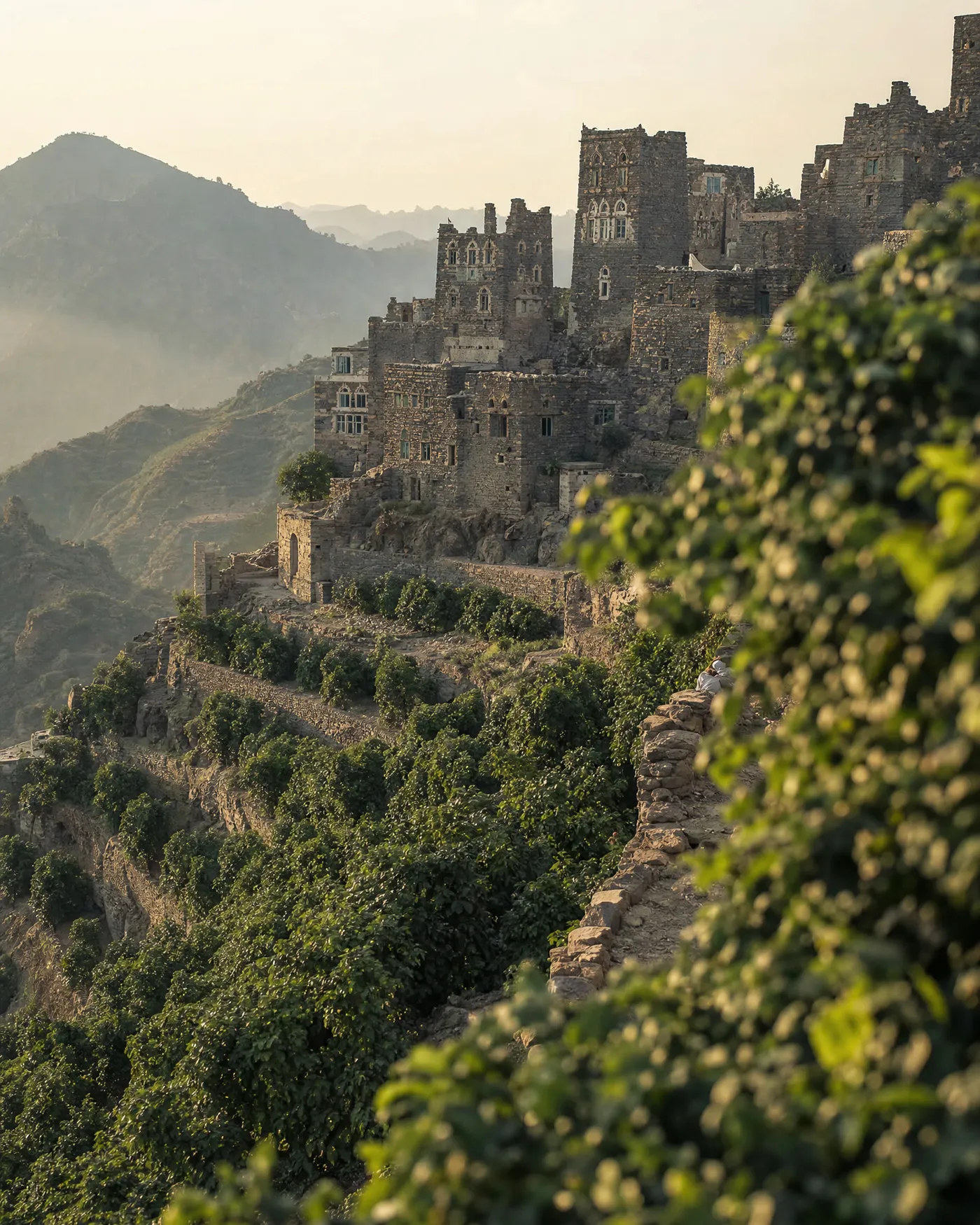
Yemen, in the 1400s. That is the earliest solid evidence anyone has. Sufi communities there drank coffee to stay alert through long nights of prayer, and the drink spread from those gatherings into ordinary life.
From Yemen it moved fast. Mecca, Cairo, then Istanbul, where the first coffeehouse opened in 1554. The Ottomans made coffee a social institution: a place to talk, read, play games and argue. The way of brewing it, powder-fine in a small pot, is what the world now calls Turkish coffee.
Where Does the Word "Coffee" Come From?
From the Arabic qahwah. Ottoman Turkish made it kahve, European languages borrowed it from there, and English settled on "coffee." Every time you order one, you are speaking a little Turkish.
Where Is Coffee Grown Today?
All around the middle of the world. Coffee cannot survive frost, so it grows in the tropics, in a band between the Tropic of Cancer and the Tropic of Capricorn that the trade calls the coffee belt. Arabica likes it higher and cooler; robusta takes the heat lower down.
That belt now crosses Africa, Arabia, the Americas, Asia and the Pacific, and each part of it does something different to the cup. That is Part 3.
So What Ends Up in Your Cup?
A roasted seed, from a fruit, from a shrub that started in an Ethiopian forest. Everything else in this series is what happens between that branch and your cup: where it grew, how high, what was done to the fruit, how it was roasted and how it was brewed.
Here is where it ends up for us. Lezzet Traditional is two origins and two roasts: a rich arabica roasted dark and a bright one roasted lighter. We roast each on its own, fresh in the USA in small batches, then blend them and grind them powder-fine for Turkish coffee, the way that has been brewed since the first coffeehouses.
Where Coffee Comes From: FAQ
Where does coffee come from?
Coffee is the roasted seed of the fruit of the coffee plant. The species behind most coffee, arabica, is native to the highland forests of southern Ethiopia, and people in Yemen were the first on record to brew it as a drink, in the 1400s.
Is a coffee bean a bean?
No. It is the seed of a cherry-like fruit. Most coffee cherries hold two seeds facing each other; about 5 percent hold a single round one called a peaberry.
Where is coffee grown today?
In the tropics, in a band around the world between the Tropics of Cancer and Capricorn often called the coffee belt. Frost kills the plant, so it needs a climate that never freezes.
Who discovered coffee?
Nobody knows. The famous story of a goatherd whose goats danced after eating coffee cherries is a legend, first written down in 1671. The first solid evidence of coffee drinking comes from Sufi communities in Yemen in the 1400s.
Where does the word coffee come from?
From the Arabic qahwah, which became kahve in Ottoman Turkish and reached English from there.